Starting a career in heating, ventilation, and air conditioning can happen much faster than many people expect. If you are wondering how long is HVAC school, the answer usually ranges from several months to around two years, depending on the type of program you choose.
That flexibility is one reason HVAC training attracts people who want practical skills without spending four years in college. Some students complete a certificate program and enter the workforce quickly, while others choose longer diploma or associate degree programs for broader technical training.
Your total timeline can also depend on whether you study full-time, attend classes part-time, complete an apprenticeship, or pursue additional licenses and certifications.
How Long Is HVAC School for Most Students?
For most students, how long is HVAC school depends primarily on the credential they want to earn. Short certificate programs may take approximately six months, while associate degree programs commonly require about two years of full-time study.
Typical training options include:
- HVAC certificate programs: about 6–12 months
- HVAC diploma programs: about 9–18 months
- Associate degree programs: approximately 2 years
- Apprenticeships: commonly 3–5 years
- Continuing education courses: several days to several months
These timelines are general estimates. Individual schools structure their programs differently, and students attending part-time may need longer to graduate.
HVAC Certificate Programs
A certificate program is often the quickest route into entry-level HVAC work.
Many certificate programs focus heavily on practical topics such as refrigeration principles, electrical systems, heating equipment, air conditioning systems, troubleshooting, installation, and workplace safety.
Students may also learn how to work with common tools, interpret wiring diagrams, measure airflow, and identify problems in residential HVAC equipment.
Because certificate programs focus on essential job skills rather than general academic subjects, they can often be completed in less than one year.
For someone asking how long is HVAC school because they want to start working quickly, a certificate program may be one of the fastest options.
HVAC Diploma Programs
Diploma programs generally provide more classroom and laboratory training than shorter certificate programs.
A typical diploma curriculum may cover:
- Heating systems
- Air conditioning systems
- Refrigeration
- Electrical troubleshooting
- Ventilation
- Heat pumps
- Commercial HVAC equipment
- System diagnostics
- Safety procedures
Some programs also include career preparation, customer service, and basic building controls.
Depending on the school and course schedule, an HVAC diploma may take approximately nine months to 18 months.
Associate Degree in HVAC Technology
Students who want more extensive technical education may choose an associate degree in HVAC or refrigeration technology.
These programs generally take around two years of full-time study and combine HVAC coursework with general education classes.
What Students May Study
An associate degree curriculum can include advanced refrigeration, commercial systems, electrical controls, system design, energy efficiency, building automation, mathematics, and technical communication.
Because students receive broader training, an associate degree may be useful for people interested in eventually moving toward supervisory, commercial, technical sales, estimating, or management positions.
However, a degree is not always required to begin working as an HVAC technician.
How Long Is HVAC School With an Apprenticeship?
An apprenticeship follows a different training model. Instead of spending most of your time in a classroom, you typically combine paid workplace experience with technical instruction.
HVAC apprenticeships commonly last several years because apprentices gradually build experience under qualified professionals.
During an apprenticeship, training may include:
- Installing HVAC equipment
- Maintaining heating systems
- Diagnosing electrical problems
- Repairing air conditioning equipment
- Reading technical drawings
- Following safety requirements
- Working with refrigeration systems
Although apprenticeships take longer than many trade-school programs, participants are generally gaining real workplace experience throughout the process.
Full-Time vs. Part-Time HVAC Training
Another important factor affecting how long is HVAC school is your weekly course schedule.
Full-Time Programs
Full-time students usually complete their programs faster because they take more classes and laboratory sessions each week.
A program designed to take nine months, for example, may involve classes several days per week.
Part-Time Programs
Part-time HVAC programs are designed for students who may already have jobs, family responsibilities, or other commitments.
Classes may be offered during evenings or weekends.
The advantage is flexibility, but completing the same coursework may take considerably longer.
What Can Affect HVAC School Length?
Not every student follows the same training timeline.
Several factors can change how long your HVAC education takes.
Type of Credential
A certificate takes less time than an associate degree because it includes fewer courses.
School Schedule
Accelerated programs may compress training into fewer months, while traditional programs may spread classes across several semesters.
Full-Time or Part-Time Enrollment
Attending school part-time usually extends the overall program length.
Hands-On Training Requirements
Some programs include laboratory work, internships, externships, or cooperative education placements that add valuable practical experience.
Previous Education
Students who already have relevant coursework or transferable credits may occasionally complete certain programs faster.
Do You Need HVAC School to Become a Technician?
Formal HVAC school is a common training route, but it is not the only pathway into the profession.
Some technicians learn through apprenticeships or employer-sponsored training. Requirements can also vary based on the type of HVAC work performed and the location where the technician works.
Employers often value candidates who understand electrical systems, refrigeration, airflow, troubleshooting, safety, and equipment installation.
Completing a structured HVAC program can give beginners an organized foundation before working independently in the field.
HVAC Certifications Can Add More Training Time
Finishing HVAC school does not necessarily mean your education is finished.
Technicians may pursue additional industry certifications as their careers develop.
In the United States, technicians who work with regulated refrigerants may need appropriate certification under federal requirements. Other voluntary certifications may demonstrate knowledge of specific equipment or technical specialties.
Preparation time depends on the certification, your previous training, and your experience level.
This means the answer to how long is HVAC school is slightly different from the question of how long it takes to become an experienced HVAC professional.
Can You Finish HVAC School Faster?
Accelerated programs can sometimes shorten the amount of calendar time required to complete training.
Students may attend classes more frequently or complete additional coursework each term.
However, the fastest program is not automatically the best program.
HVAC work requires practical problem-solving skills. A quality program should give students enough time to understand electrical principles, refrigeration cycles, equipment operation, safety procedures, and diagnostic techniques.
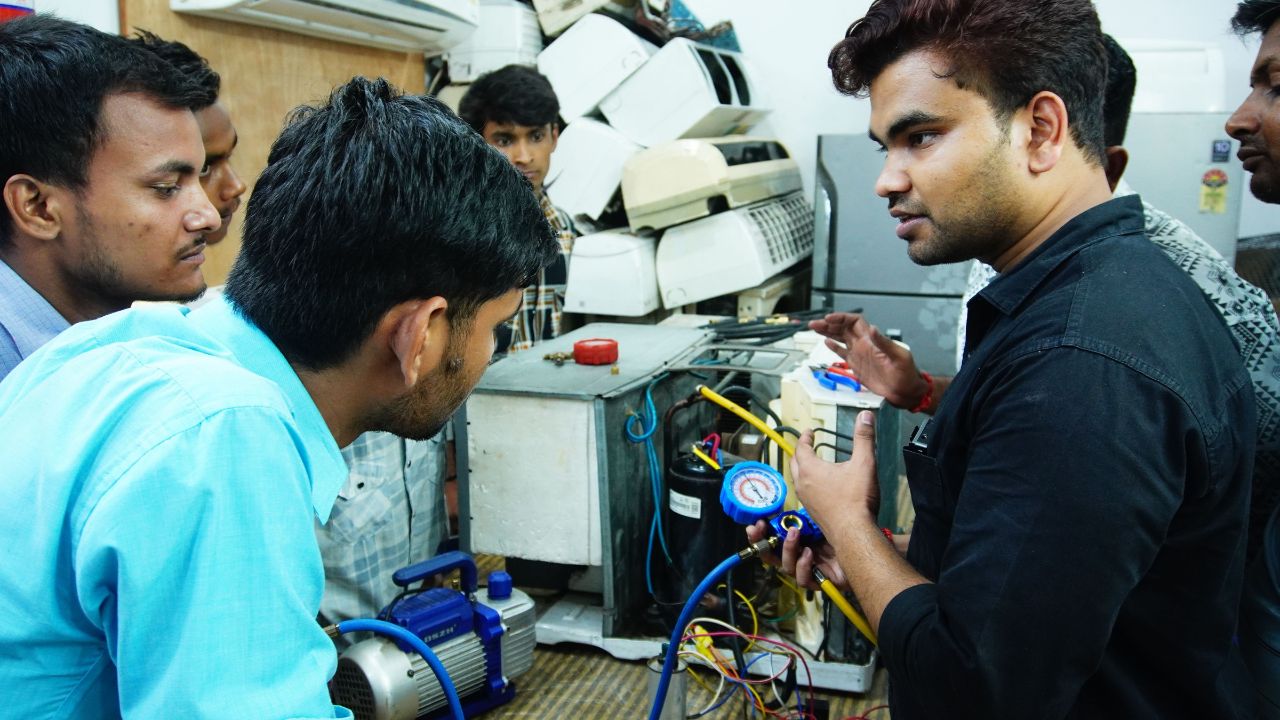
Hands-on laboratory experience can be especially valuable because technicians regularly work with real equipment and tools.
Is HVAC School Difficult?
HVAC training can be challenging, but students are usually taught concepts progressively.
You may study basic mathematics, electrical theory, refrigeration, airflow, mechanical systems, and troubleshooting.
Someone who enjoys learning how equipment works may find the hands-on nature of HVAC education especially appealing.
Consistent attendance and practice are important because later subjects frequently build on concepts covered earlier in the program.
How to Choose the Right HVAC Program
When deciding where to study, avoid choosing a program based only on how quickly it can be completed.
Consider factors such as:
- Hands-on laboratory training
- Program curriculum
- Instructor experience
- Tuition and financial aid options
- Graduation requirements
- Class schedules
- Career services
- Apprenticeship connections
- Employer relationships
- Certification preparation
Ask the school exactly how much time students spend working with actual HVAC equipment rather than studying only through lectures or textbooks.
FAQ
How long is HVAC school for a certificate?
Many HVAC certificate programs can be completed in approximately six to twelve months. The exact timeline depends on the school, course schedule, and whether you study full-time or part-time.
Can you become an HVAC technician in six months?
Some accelerated certificate programs can be completed in around six months. Completing school, however, does not automatically make someone an experienced technician. Practical workplace experience remains important.
How long does an HVAC associate degree take?
An associate degree in HVAC technology generally requires approximately two years of full-time study.
Is HVAC school longer than electrician school?
Training timelines vary considerably for both careers. Short HVAC certificate programs may last less than one year, while apprenticeships in HVAC or electrical trades can take several years.
Can I attend HVAC school part-time?
Yes. Many technical and trade schools offer evening or part-time schedules for students who work during the day. Part-time enrollment normally increases the total time required to finish the program.
How long does it take to learn HVAC completely?
There is no single point when an HVAC technician has learned everything. Initial training may take months or years, while technicians continue developing troubleshooting and technical skills throughout their careers.
Do HVAC apprentices get paid?
Many formal apprenticeships combine paid employment with classroom instruction. Pay typically increases as apprentices gain skills and advance through the program.
Is a two-year HVAC degree worth it?
It can be valuable for students who want broader technical knowledge or hope to eventually pursue commercial HVAC, controls, supervision, estimating, or management. A two-year degree is not required for every entry-level HVAC position.
Conclusion
So, how long is HVAC school? For many students, the answer is somewhere between six months and two years, although apprenticeships may take several years to complete.
A short certificate program can provide a relatively fast route into entry-level work, while diploma and associate degree programs offer more extensive technical education. The right choice depends on your career goals, available time, budget, and preferred learning style.
Rather than choosing a program solely because it is short, look for training that provides solid technical instruction and meaningful hands-on experience. HVAC technicians work with complex electrical, mechanical, heating, cooling, and refrigeration systems, so building a strong foundation can make the transition from classroom training to real-world work much smoother.