
Choosing a career can feel overwhelming when you want decent pay, reliable work, and opportunities to grow without necessarily spending four years earning a traditional college degree. So, is hvac a good career for someone looking for a practical, hands-on profession? For many people, the answer is yes.
Heating, ventilation, air conditioning, and refrigeration systems are essential in homes, offices, schools, hospitals, stores, and industrial buildings. Those systems require trained professionals to install, maintain, diagnose, and repair them.
HVAC can offer solid earning potential and long-term career options, but it also involves physical work, changing schedules, technical learning, and sometimes uncomfortable working conditions. Understanding both sides can help you decide whether the profession matches your interests.
Is HVAC a Good Career in 2026?
Yes, HVAC can be a rewarding career for people who enjoy troubleshooting, mechanical systems, practical technology, and working with their hands.
Demand is another major advantage. According to the U.S. Bureau of Labor Statistics, employment for heating, air conditioning, and refrigeration mechanics and installers is projected to grow 8% between 2024 and 2034. The agency projects roughly 40,100 openings per year on average during that period.
HVAC professionals work with much more than traditional air conditioners. Modern technicians may encounter heat pumps, smart thermostats, electronic controls, ventilation equipment, refrigeration systems, energy-efficient technology, and increasingly sophisticated building systems.
What Does an HVAC Technician Actually Do?
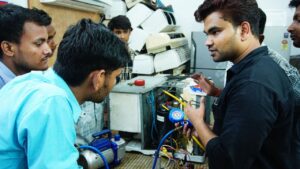
An HVAC technician installs, maintains, tests, troubleshoots, and repairs equipment used to control temperature, ventilation, refrigeration, and indoor comfort.
Typical responsibilities can include:
- Inspecting heating and cooling equipment
- Diagnosing system problems
- Performing routine preventive maintenance
- Installing HVAC equipment and components
- Testing electrical and mechanical controls
- Checking airflow and system performance
- Repairing or replacing defective components
- Working with refrigerant systems
- Explaining maintenance or repair needs to customers
- Following safety and environmental requirements
The exact responsibilities depend on the employer and specialization. Residential technicians often visit customers’ homes, while commercial HVAC professionals may work in offices, schools, warehouses, hospitals, or other large facilities.
How Much Can You Earn in an HVAC Career?
Earning potential is one reason people consider entering HVAC.
According to the U.S. Bureau of Labor Statistics, the median annual wage for heating, air conditioning, and refrigeration mechanics and installers was $59,810 in May 2024. The highest 10% earned more than $91,020.
Actual earnings can vary significantly according to location, experience, employer, specialization, overtime, certifications, and technical ability.
Experience Can Increase Your Value
Entry-level technicians generally earn less while developing their skills. Experienced technicians who can independently diagnose complicated problems may have stronger earning opportunities.
Technicians can also advance into positions such as:
- Senior HVAC technician
- Commercial HVAC specialist
- Refrigeration technician
- Service manager
- HVAC estimator
- Building controls technician
- Sales or technical representative
- HVAC business owner
Why Is HVAC a Good Career for Skilled-Trade Workers?
One major benefit of HVAC is that it provides a career path based heavily on practical skills.
Strong Demand for HVAC Services
Heating and cooling equipment requires installation, inspection, maintenance, and repair throughout its operating life. Older equipment also eventually needs replacement.
This creates recurring demand for qualified workers rather than demand based solely on new construction.
Multiple Career Paths
HVAC is not a single job. Technicians can specialize in residential service, commercial equipment, refrigeration, installation, maintenance, building automation, controls, or other areas.
Someone who starts as a technician may eventually move into management, estimating, sales, training, or business ownership.
Practical Problem-Solving
Every service call can present a different problem. A technician might diagnose an airflow issue one day and troubleshoot an electrical control problem the next.
People who enjoy finding out why equipment is not working correctly may find this variety satisfying.
What Are the Challenges of an HVAC Career?
Although the advantages are attractive, HVAC isn’t the perfect profession for everyone.
Technicians may work outdoors during very hot or cold weather. Some jobs require working in confined areas, mechanical rooms, attics, rooftops, or other uncomfortable environments.
Schedules can also become demanding during peak seasons. When heating equipment fails during winter or an air conditioner stops during extreme summer heat, customers often need help quickly. Some technicians therefore work evenings, weekends, overtime, or on-call shifts.
Physical demands can include standing, bending, climbing, carrying equipment, and working in awkward positions. Following proper workplace safety procedures is essential.
What Training Do You Need for HVAC?
There isn’t one universal path into the HVAC industry.
Many technicians complete a postsecondary nondegree program at a technical or trade school. Others enter through apprenticeships or employer training programs and develop their skills through supervised on-the-job experience.
Training commonly covers topics such as:
- Basic refrigeration principles
- Electrical systems
- Heating equipment
- Air-conditioning systems
- Ventilation and airflow
- System diagnostics
- Controls and thermostats
- Workplace safety
In the United States, technicians who perform work that could release regulated refrigerants generally need EPA Section 608 certification. The EPA offers different certification types depending on the equipment being serviced, including Universal certification for technicians working across covered equipment categories.
Who Is HVAC Best Suited For?
HVAC tends to suit people who prefer practical work rather than spending their entire workday behind a desk.
It may be worth considering if you enjoy:
- Fixing mechanical problems
- Learning how machines operate
- Troubleshooting technical issues
- Working with tools
- Visiting different job locations
- Combining electrical and mechanical knowledge
- Learning new technologies
Communication skills matter too. Residential technicians regularly interact with homeowners and need to explain technical problems clearly without making the customer feel overwhelmed.
Is HVAC a Good Long-Term Career?
HVAC has characteristics that can support long-term employment because buildings continually require climate-control, ventilation, heating, and refrigeration systems.
Technology is changing the profession rather than eliminating the need for skilled technicians. Heat pumps, connected thermostats, variable-speed equipment, smart controls, and higher-efficiency systems can require technicians to develop additional technical knowledge.
Workers willing to keep learning may therefore be better positioned as equipment becomes more sophisticated.
FAQs
Is HVAC hard to learn?
HVAC involves electrical, mechanical, refrigeration, airflow, and troubleshooting concepts, so there is plenty to learn. However, structured training and supervised hands-on experience can help beginners develop these skills progressively.
Is HVAC a stressful career?
It can sometimes be stressful, particularly during busy heating and cooling seasons or when diagnosing difficult equipment problems. Workload and stress levels vary considerably between employers and positions.
Can HVAC technicians make good money?
Yes. Earnings can become competitive as technicians gain experience and specialized skills. BLS reported a median annual wage of $59,810 in May 2024 for HVAC mechanics and installers in the United States.
Do you need a college degree for HVAC?
A four-year bachelor’s degree is generally not required to become an HVAC technician. Many workers complete technical education, apprenticeships, certifications, and extensive on-the-job training instead.
Is HVAC physically demanding?
HVAC can involve standing, bending, climbing, lifting, and working in tight or uncomfortable locations. The physical demands depend on the specific job and work environment.
Is HVAC better than other skilled trades?
There isn’t one trade that is best for everyone. HVAC may appeal particularly to people interested in mechanical equipment, electrical troubleshooting, refrigeration, climate-control technology, and customer service.
How long does it take to become an HVAC technician?
The timeline varies depending on the training route. Technical programs can provide foundational education, while becoming a fully competent technician generally requires additional hands-on training and experience.
Can you start your own HVAC business?
Experienced professionals may eventually choose business ownership, subject to applicable licensing, insurance, certification, and local regulatory requirements. Running a company also requires skills beyond technical repair, including customer service, estimating, scheduling, and business management.
Conclusion
So, is hvac a good career? For someone who enjoys practical problem-solving, technical equipment, hands-on work, and continually developing new skills, HVAC can provide a promising career path.
The profession comes with genuine challenges, including physical demands, uncomfortable working environments, and potentially irregular schedules. At the same time, projected employment growth, multiple specialization options, and opportunities for advancement make HVAC worth considering.
The best decision comes down to how well the everyday realities of the trade match your abilities and interests. If diagnosing equipment, solving mechanical problems, and building practical expertise sound appealing, HVAC could become a career with room to grow.