A slow-draining sink is annoying. A drain that refuses to move water at all can stop a kitchen, bathroom, or laundry room from functioning normally. When plunging and basic drain cleaning do not solve the problem, a plumbing snake is often the next tool worth trying.
Learning how to use a plumbing snake is mostly about technique rather than force. The goal is to guide a flexible cable through the drain until it reaches the obstruction, then break through, loosen, or retrieve whatever is blocking the pipe. Done correctly, a drain snake can remove hair, soap buildup, food debris, and other common obstructions without requiring harsh chemical drain cleaners.
Done carelessly, though, it can scratch fixtures, become stuck in a drain, or potentially damage vulnerable plumbing.
That distinction matters.
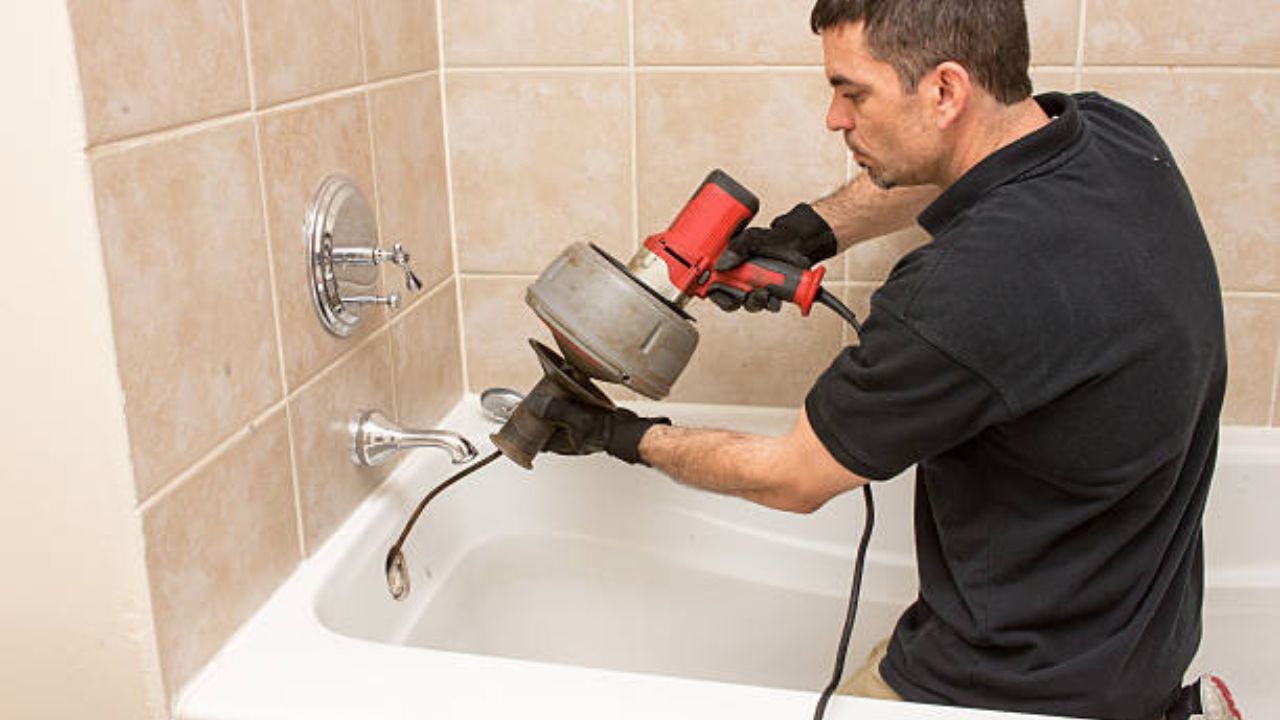
Professional plumbers use several types of drain-cleaning equipment, from small hand augers to powerful sectional and drum machines. A homeowner tackling a bathroom sink needs nothing like the equipment used to clear a long building sewer.
This guide explains what a plumbing snake does, how to select the right one, how to operate it correctly, what to do when it reaches a blockage, and when the problem is better left to a licensed plumber.
What Is a Plumbing Snake?
A plumbing snake, commonly called a drain snake, is a flexible cable designed to travel through a drainpipe and physically interact with a clog.
Most manual versions have three basic parts:
- A flexible metal cable
- A handle or rotating drum
- A working end or auger head
Instead of trying to dissolve a blockage, the cable physically reaches it. Depending on the type of obstruction and snake, the end may break the blockage apart, push through it, or hook material so it can be pulled back out.
The terms plumbing snake and drain auger are often used interchangeably, although plumbers may use “auger” for particular designs and machines.
The principle remains straightforward: put a flexible cable inside the pipe, advance it carefully, rotate it as needed, work through the obstruction, and retrieve the cable.
What Can a Drain Snake Remove?
A small hand-operated snake can be useful against common household blockages involving:
- Hair
- Soap residue
- Small accumulations of organic material
- Some food debris
- Minor sludge buildup
- Localized obstructions inside a drain line
It isn’t the answer to every drainage problem.
Tree roots, collapsed pipes, severely scaled lines, major sewer obstructions, or objects lodged deep inside plumbing may require professional equipment and inspection.
Plumbing Snake vs. Plunger vs. Drain Cleaner
Before reaching for an auger, it helps to know which tool suits the problem.
| Method | Best Used For | Main Advantage | Main Limitation |
|---|---|---|---|
| Plunger | Simple sink and toilet clogs | Fast and inexpensive | May not reach deeper obstructions |
| Plumbing snake | Deeper localized drain clogs | Physically reaches blockage | Requires careful handling |
| Chemical cleaner | Certain organic buildup | Little mechanical work | Can be hazardous and unsuitable for some pipes |
| Professional auger | Difficult/deep obstructions | Greater reach and power | Usually requires experience |
| Hydro jetting | Heavy buildup in suitable lines | Cleans pipe walls extensively | Professional equipment required |
For many household situations, plunging is a reasonable first attempt. If the obstruction is farther down the line, a snake can reach places a plunger cannot.
How to Use a Plumbing Snake: Quick Answer
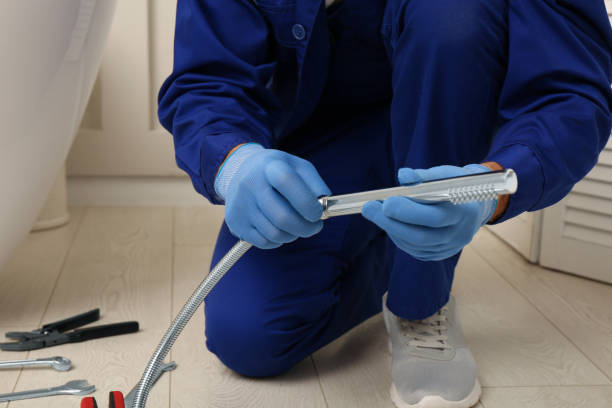
For readers looking for the short version of how to use a plumbing snake, the basic process is:
- Select an auger appropriate for the drain.
- Remove the drain stopper if necessary.
- Feed the cable slowly into the drain opening.
- Continue until you encounter resistance.
- Rotate the cable while applying gentle forward pressure.
- Work the cable through or into the blockage.
- Slowly retrieve the cable and remove attached debris.
- Repeat if the drain is still restricted.
- Clean the cable.
- Test the drain with water.
The most important rule is simple: don’t substitute force for technique.
Heavy resistance does not automatically mean you’ve found the clog. You could be encountering a bend, trap, fitting, or another feature of the drainage system.
Understanding the Different Types of Plumbing Snakes
Choosing the correct equipment can make the difference between an easy repair and a frustrating afternoon.
1. Hand Drain Snake
A basic hand drain snake uses a relatively small flexible cable and is suited to many light household jobs.
These tools are commonly used on bathroom sinks, tubs, and shower drains where hair and soap buildup are likely causes.
They are inexpensive, compact, and relatively easy to control.
A hand drain snake is particularly useful when a blockage lies beyond the drain opening but isn’t deep within the home’s drainage system.
2. Drum Auger
A drum auger stores the cable inside a round housing. The drum helps control, rotate, extend, and retrieve the cable.
Manual models are common for home use, while powered versions are available for more demanding work.
A drum auger gives the operator more cable control than many simple handheld snakes, which can make it useful for somewhat deeper obstructions.
3. Toilet Auger
A toilet requires special consideration.
A toilet auger, sometimes called a closet auger, is designed specifically for a toilet’s trapway. Its shape and protective tubing help it travel through the fixture while reducing the chance of scratching the porcelain.
A toilet auger should generally be chosen instead of pushing an ordinary exposed metal snake into a toilet bowl.
4. Powered Drain Snake
A powered drain snake rotates the cable using an electric motor. These machines can handle tougher and deeper obstructions, but their additional torque creates additional risk.
Cable control becomes especially important.
A powered drain snake can injure an inexperienced operator or damage plumbing when used incorrectly. If the job has reached the point where a large powered machine seems necessary, professional drain cleaning may be the safer choice.
What You Need Before Starting
For a typical household drain, your setup may include:
- Appropriate plumbing snake or auger
- Work gloves
- Safety glasses
- Bucket
- Old towels or absorbent cloths
- Small cleaning brush
- Flashlight
- Adjustable pliers if a trap needs removal
Avoid working in clothing with loose sleeves, dangling jewelry, or anything else that could become caught around rotating equipment.
If chemical drain cleaner has already been poured into the drain, use extra caution. Residual chemicals can remain inside standing water or pipework and may splash when plumbing components are opened.
Step-by-Step: How to Snake a Drain
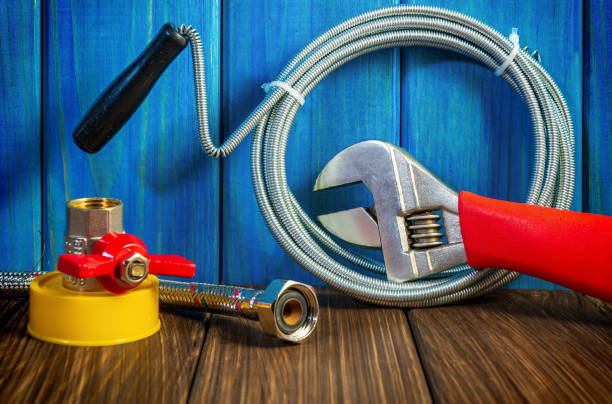
Understanding how to snake a drain properly begins before the cable enters the pipe.
First identify which fixture is affected.
If only one sink drains slowly, the obstruction is probably relatively close to that fixture. If several fixtures back up together, the problem could involve a larger branch or main drain line.
That difference affects what equipment should be used.
Here is how to snake a drain in a typical household situation.
Step 1: Prepare the Work Area
Clear everything from beneath or around the fixture.
Place towels nearby and position a bucket where dirty water or debris can be collected. Drain cleaning can become messy quickly, especially when a cable comes back carrying wet hair or sludge.
Put on gloves and eye protection before handling the cable.
Good preparation isn’t just about cleanliness. Having enough room to control the cable reduces the temptation to rush.
Step 2: Remove the Stopper or Drain Cover
Some sinks allow the cable to enter directly through the drain after the stopper is removed.
Bathtubs and showers may have covers that need to be removed first.
Never force a large auger head through an opening that is too small. Doing so can damage the fixture or cause the cable to become difficult to retrieve.
Step 3: Insert the Snake Into the Drain
Feed the cable into the opening a little at a time.
This is the beginning of the actual drain snaking process.
Keep the cable controlled rather than allowing a large loose loop to develop outside the pipe. Too much exposed cable can bend, kink, or whip around when rotated.
Effective drain snaking depends on maintaining steady control from the tool to the drain opening.
Step 4: Advance the Cable Slowly
Continue feeding the cable into the drain.
At some point you will probably feel resistance.
Don’t immediately assume you’ve reached the obstruction.
Drainpipes change direction. The cable may be contacting a trap or elbow. Gentle rotation can often help the end travel around the bend.
This is where patience matters.
If the cable stops suddenly, pull it back slightly, rotate it, and try advancing again.
Step 5: Identify the Clog
A real blockage often feels different from a pipe bend.
A bend may resist briefly and then allow the cable to advance once its angle changes. A clog can feel softer, springier, or persistent.
Hair may feel quite different from a hard foreign object.
You don’t need to identify the material perfectly. You simply need to recognize that repeated resistance at the same point may indicate you’ve reached the obstruction.
Step 6: Rotate the Cable
Once the snake contacts the suspected blockage, rotate it according to the tool manufacturer’s instructions.
Use controlled pressure.
The objective is to allow the end of the cable to engage with the obstruction.
With hair, the cable may twist into the material so you can retrieve it. Softer buildup may break apart as the cable passes through.
Don’t aggressively ram the cable forward.
Step 7: Work Through the Blockage
Advance slightly, rotate, and pull back.
Repeat that movement rather than applying continuous heavy force.
You may notice the cable suddenly moving farther into the pipe. That can indicate the obstruction has opened.
Still, don’t assume the drain is completely clear.
A small opening through a large blockage may allow water to drain temporarily while leaving significant material behind.
Work the area carefully before retrieving the cable.
Step 8: Pull the Snake Back Slowly
Retrieve the cable gradually.
As it comes out, wipe debris from it using a disposable cloth or suitable cleaning material.
Do not allow dirty cable to coil across floors or countertops.
If the auger has hooked a clump of hair or debris, remove it and dispose of it properly rather than washing it straight back down the same drain.
Step 9: Repeat if Necessary
One pass isn’t always enough to clear a clogged drain.
Run a small amount of water to see how the fixture responds. If drainage has improved but remains slow, another pass may remove material left behind.
Sometimes it takes two or three controlled passes to clear a clogged drain thoroughly enough to restore normal flow.
If repeated attempts make little difference, stop and reconsider the cause rather than escalating force.
Step 10: Test the Drain
Once the cable has been removed, test the fixture.
Start with a moderate amount of water instead of immediately filling an entire sink or tub.
Watch the drainage speed.
Water should move freely without pooling for an unusual amount of time.
Also inspect accessible plumbing beneath the fixture for leaks, particularly if you removed and reinstalled the trap.
How to Use a Plumbing Snake on a Sink
A sink drain clog is one of the most common reasons people buy a small auger.
Bathroom sinks frequently collect hair, soap residue, toothpaste, cosmetic products, and other debris. Kitchen sink blockages are more likely to involve food residue, fats, oils, grease, and soap.
For a shallow sink drain clog, start by checking the stopper assembly. Sometimes the obstruction is directly beneath it and can be removed without using an auger.
If the blockage is deeper, insert the appropriate snake through the drain or access the line after removing the trap when appropriate.
Never aggressively force the cable through delicate fittings.
How to Snake a Bathroom Sink
A bathroom sink drain often develops a particularly unpleasant mixture of hair, soap, grooming products, and organic residue.
Start by removing and cleaning the stopper.
You may solve the problem immediately.
If the bathroom sink drain remains slow, a small hand auger can be fed carefully into the line. If the cable has trouble passing the P-trap, experienced DIYers sometimes remove the trap and snake directly into the wall-side drainpipe.
Place a bucket beneath the trap before loosening anything because it will contain water.
How to Snake a Shower Drain
A shower drain clog is commonly associated with hair and soap buildup.
Remove the drain cover if necessary and check for material near the opening before inserting a snake. In many cases, a substantial amount of hair sits close enough to the surface to remove manually with an appropriate drain tool.
For a deeper shower drain clog, guide a small snake slowly into the pipe, rotating it gently when it meets bends or resistance.
Retrieve any material the cable catches, clean the cable, and repeat until water flows normally.
How to Snake a Bathtub Drain
A bathtub drain clog is similar to a shower blockage, but the drain configuration may differ.
Many tubs are easier to snake through the overflow opening rather than forcing a cable directly through the drain and trap. The exact arrangement depends on the fixture.
When dealing with a bathtub drain clog, remove accessible hair first. If snaking through the overflow, carefully remove the overflow plate and associated parts as appropriate, keeping track of how everything fits together.
Do not force the cable if you’re unsure of the plumbing arrangement.
What About a Clogged Toilet?
A clogged toilet requires a different approach.
Start with a proper toilet plunger. If plunging doesn’t work and the obstruction appears to be within the toilet trap, use a closet auger designed for porcelain fixtures.
For a clogged toilet, avoid using an ordinary exposed drain snake that can scratch the bowl. A toilet-specific auger provides better control and fixture protection.
If you suspect a hard object was flushed, repeatedly forcing it farther into the plumbing may make the problem more difficult to repair.
How Far Should You Put a Snake Down a Drain?
There isn’t one correct distance.
You should use enough cable to reach the obstruction while staying within the limits of the equipment and your ability to control it.
A blockage in a sink trap might be only a short distance away. A branch drain obstruction may be much farther down the line.
The key is diagnosing the drainage pattern rather than automatically feeding every foot of cable into the pipe.
If the blockage appears to be deep within the drainage system, a small homeowner auger may no longer be the correct tool.
Why Your Drain Snake Won’t Go Around a Bend
This is one of the most common frustrations for first-time users.
If the drain snake won’t go down, it doesn’t necessarily mean the pipe is completely blocked.
The cable may be meeting:
- A P-trap
- An elbow
- A tee
- A tight bend
- A rough internal pipe surface
- A solid obstruction
When a drain snake won’t go down, back it out slightly and try controlled rotation while applying gentle forward pressure.
Do not keep pushing harder.
A kinked cable can become much harder to retrieve.
What Does a Clog Feel Like With a Drain Snake?
This comes with experience, but there are useful clues.
A pipe bend often gives relatively firm resistance that changes as the cable rotates.
A hair clog may feel softer or springy.
Dense buildup can feel like a persistent barrier that slowly gives way.
A hard object may create a sharp stop with little change as the cable turns.
The important point is not to interpret every resistance point as something that needs to be punched through.
Common Plumbing Snake Mistakes
Knowing how to unclog a drain involves knowing what not to do.
Using Excessive Force
More force does not necessarily mean better cleaning.
Aggressive pushing can kink the cable or put unnecessary stress on plumbing components.
When learning how to unclog a drain, think in terms of controlled rotation, gradual advancement, and repeated retrieval rather than brute strength.
Choosing the Wrong Snake
A toilet auger and a small sink snake are built for different situations.
Similarly, a light handheld cable isn’t designed to solve every main sewer problem.
Match the tool to the fixture and pipe.
Letting Too Much Cable Hang Loose
Long loops of exposed cable are difficult to control.
Keep the drum or handle reasonably close to the drain entrance.
Assuming Every Blockage Is a Clog
A recurring drainage problem can indicate:
- Damaged pipe
- Poor drainage design
- Root intrusion
- Heavy scale
- Pipe belly
- Partial collapse
- Improper venting
- Sewer-line problems
Repeated snaking may temporarily improve symptoms without correcting the underlying problem.
Can a Plumbing Snake Damage Pipes?
Yes, improper plumbing snake safety practices can result in damage.
The level of risk depends on the tool, pipe condition, pipe material, cable size, and operator technique.
Older or deteriorated plumbing deserves special caution. A powered machine can also generate much more force than a small hand auger.
Good plumbing snake safety means stopping when resistance feels abnormal, choosing equipment appropriate for the pipe, wearing protective equipment, and avoiding powered machinery you are not trained to control.
Can You Snake PVC Pipes?
PVC drainage pipes can be snaked, but care is still required.
The idea that a snake is automatically safe simply because the plumbing is modern is misleading. An aggressive cutting head, inappropriate machine, or poor technique can still create problems.
Use a correctly sized tool and moderate force.
If you suspect broken or misaligned piping, mechanical cleaning isn’t a substitute for inspecting the line.
Should You Use Drain Cleaner Before Snaking?
Generally, combining mechanical work with recently applied chemical drain cleaners creates an unnecessary hazard.
If chemical drain cleaner is sitting inside a blocked fixture, opening a trap or inserting and retrieving a cable may expose you to splashes.
Some formulations are strongly corrosive.
If chemical drain cleaner has already been used, read the product’s safety information and tell a plumber what was poured into the drain if professional service becomes necessary.
Never casually mix different drain-cleaning chemicals.
Plumbing Snake vs. Hydro Jetting
A plumbing snake and hydro jetting solve drainage problems differently.
A snake mechanically opens or removes an obstruction. Hydro jet equipment uses pressurized water and specialized nozzles to clean suitable drain and sewer lines.
Hydro jetting can be effective against accumulated grease, sludge, and deposits, but it requires proper diagnosis and equipment. Pipe condition should be considered before high-pressure cleaning.
For a single hair-clogged bathroom sink, hydro jetting would usually be unnecessary. For recurring buildup in larger lines, professional cleaning may be more appropriate.
When a Drain Camera Is Useful
Repeated clogs sometimes need diagnosis rather than another cleaning attempt.
A sewer camera inspection allows a technician to examine accessible portions of a drain or sewer line from inside.
A sewer camera inspection can help investigate recurring blockages, damaged sections, root intrusion, offsets, and other structural concerns.
It is especially valuable when a line keeps blocking after apparently successful cleaning.
Why Does My Drain Keep Clogging?
A recurring drain clog is a symptom worth investigating.
If a sink needs snaking every few weeks, the problem may not simply be bad luck.
Possible causes of a recurring drain clog include heavy buildup, incorrect pipe slope, deteriorating pipe surfaces, foreign objects, root intrusion in underground lines, or a blockage farther downstream.
Instead of repeatedly treating the symptom, find out why material keeps accumulating.
Drain Snake vs. Professional Drain Cleaning
DIY work makes sense when:
- One fixture is affected
- The likely clog is local
- You have an appropriate hand tool
- The plumbing is in reasonable condition
- There is no sign of sewage backup
- The obstruction responds normally
Consider professional drain cleaning when multiple fixtures are affected, sewage is backing up, the cable repeatedly gets stuck, the blockage returns quickly, or you suspect a main line issue.
A company providing professional drain cleaning may have access to commercial augers, inspection cameras, locating equipment, and high-pressure cleaning systems that aren’t practical for a typical homeowner.
Signs of a Main Sewer Line Problem
A main sewer line clog can affect several fixtures rather than one isolated drain.
Possible warning signs include:
- Multiple slow drains
- Toilets behaving abnormally when another fixture drains
- Water appearing in a shower or floor drain
- Repeated backups at lower-level fixtures
- Drain problems occurring throughout the home
A suspected main sewer line clog should not automatically be attacked with a small household snake.
Sewer systems can involve longer distances, larger pipes, roots, structural damage, and sanitary hazards. Professional assessment is often the better choice.
What If the Plumbing Snake Gets Stuck?
Stop rotating and pushing.
Do not yank violently.
Try gently reversing the movement and slowly working the cable backward.
A snake can become trapped because it has:
- Kinked
- Wrapped around debris
- Entered a difficult fitting
- Become caught on damaged plumbing
- Gone into an unintended branch
If careful retrieval fails, forcing the cable can worsen the situation.
At that stage, call a plumber.
How to Clean a Plumbing Snake After Use
A dirty auger should not simply be wound into its drum and stored.
Debris and moisture can encourage corrosion and unpleasant odors.
After use:
- Remove debris from the cable.
- Clean it according to the manufacturer’s instructions.
- Dry it thoroughly.
- Inspect for kinks or damage.
- Return the cable to its housing carefully.
- Store the tool somewhere dry.
Keeping the cable clean also makes the next job much less unpleasant.
Practical Example: Hair-Clogged Bathroom Sink
Imagine a bathroom sink that has become slower over several months.
At first, water disappears within a few seconds. Eventually, a shallow pool remains after brushing your teeth.
You remove the stopper and find some hair, but cleaning it doesn’t restore normal flow.
This pattern suggests more material may be located slightly deeper.
A small manual auger is inserted and advanced slowly. After a short distance, the cable encounters soft resistance. Controlled rotation engages the obstruction.
When retrieved, the cable brings back a compact mass of hair and soap residue.
A second pass removes more.
The sink is tested and drains normally.
The lesson is useful: the first piece of debris you retrieve isn’t necessarily the entire blockage.
Practical Example: Several Drains Suddenly Slow Down
Now consider a different situation.
The kitchen sink drains slowly. A toilet begins bubbling when another fixture runs. Water also appears at the lowest shower drain.
Snaking the kitchen sink alone is unlikely to address the real problem because several fixtures are involved.
The pattern points toward a shared drainage line.
This is where good diagnosis saves time. Instead of repeatedly working on individual fixtures, the homeowner should consider professional evaluation of the larger drainage system.
How to Prevent Future Drain Clogs
Knowing how to prevent drain clogs can save more time than learning how to remove them.
For kitchens:
- Keep cooking fats and oils out of the drain.
- Scrape food into the trash or compost where appropriate.
- Use sink strainers.
- Clean strainers regularly.
For bathrooms:
- Use hair-catching drain screens.
- Remove visible hair routinely.
- Clean stoppers before buildup becomes severe.
- Don’t wash inappropriate objects down the sink.
Part of understanding how to prevent drain clogs is recognizing that drainage systems are designed primarily for water and appropriate waste—not as disposal systems for every household material.
Plumbing Snake Maintenance Tips
A quality drain auger can last for years if cared for properly.
Inspect the cable before and after each job.
Watch for:
- Severe bends
- Kinks
- Rust
- Frayed cable
- Damaged heads
- Problems with the drum mechanism
A damaged cable is harder to control and more likely to become stuck.
Follow the tool manufacturer’s maintenance instructions rather than improvising with lubricants or replacement parts that may not be suitable.
When Should You Stop DIY Drain Cleaning?
Stopping at the right time is part of competent DIY work.
Call a qualified plumber when:
- Several fixtures are backing up.
- Sewage is entering the home.
- The snake repeatedly becomes stuck.
- You encounter an immovable obstruction.
- The blockage returns soon after cleaning.
- You suspect damaged plumbing.
- You need large powered drain equipment.
- An object is lodged in a toilet or drain.
- You are unsure where the obstruction is.
- The property has older or vulnerable piping.
The objective isn’t to prove that every clog can be handled without help. It’s to solve the drainage problem without creating a larger repair.
Manual Drain Snake vs. Electric Drain Snake
| Feature | Manual Snake | Electric Snake |
|---|---|---|
| Best for | Small household clogs | More difficult blockages |
| Control | High at short distances | Requires more experience |
| Power | Low to moderate | High |
| Cost | Generally lower | Higher |
| Injury risk | Lower when used correctly | Greater due to motorized rotation |
| Typical user | Homeowner/DIYer | Experienced DIYer or professional |
| Common applications | Sink, tub, shower | Larger/deeper drain lines |
For most simple household clogs, starting with the least aggressive effective tool makes sense.
Is It Better to Push or Pull a Clog?
Either may happen depending on the obstruction and auger head.
Some blockages break apart as the cable passes through them. Hair and fibrous material may become wrapped around the cable and come out when the snake is retrieved.
The ideal outcome isn’t simply pushing everything farther down the pipe.
When possible, removing material from the plumbing reduces the amount left to create another obstruction.
Advanced Insight: Opening a Drain Isn’t Always Cleaning It
This is an important distinction that gets missed in many basic guides.
Suppose an obstruction fills most of a pipe.
A snake punches a narrow passage through the center. Water starts moving again, so the problem appears solved.
But much of the original material remains attached to the pipe walls.
That smaller opening can begin collecting debris again.
This explains why some drains become slow again soon after being snaked.
A successful drain-cleaning job isn’t measured only by whether water moves immediately afterward. Long-term performance matters too.
Why Clog Location Matters
Drain systems operate as connected networks.
A bathroom sink has its own fixture drain, but that line eventually connects with larger branch drains and ultimately the building drain and sewer or septic system.
This creates a useful diagnostic principle:
One affected fixture usually suggests a local issue. Multiple affected fixtures increase the likelihood of a shared downstream problem.
It’s not an absolute rule, but it helps determine where to start.
Understanding the drainage pattern can prevent you from snaking the wrong fixture repeatedly.
How Often Should You Snake Your Drains?
There is no good reason to snake healthy drains on a fixed schedule.
A plumbing snake is a corrective tool, not normally a routine maintenance tool.
If a drain flows normally, inserting a metal cable into it provides little benefit.
Instead, focus on preventing debris from entering the plumbing.
A drain that requires frequent snaking deserves investigation because recurring obstruction may indicate an underlying issue.
Is a Plumbing Snake Worth Buying?
For homeowners who occasionally deal with hair-clogged sinks, tubs, or showers, a basic manual auger can be useful.
The value depends on the type of plumbing problems you actually encounter.
If most problems are simple fixture clogs, owning a small hand tool makes sense.
If the property repeatedly develops major drain or sewer problems, purchasing increasingly powerful equipment may not solve the root cause. Professional diagnosis can provide more value than a larger machine.
Expert Tips for Better Results
A few habits make drain snaking much easier:
- Start with the least aggressive suitable method.
- Identify whether one or several fixtures are affected.
- Remove visible debris before using the snake.
- Keep exposed cable short and controlled.
- Rotate rather than aggressively shove the cable.
- Pull retrieved debris out instead of sending it back down.
- Make more than one controlled pass when necessary.
- Test the drain before reassembling everything.
- Clean the equipment immediately afterward.
- Investigate clogs that keep returning.
Above all, pay attention to what the tool is telling you through resistance.
Good mechanical drain cleaning involves feel and control.
Frequently Asked Questions
How do you use a plumbing snake for beginners?
To learn how to use a plumbing snake, feed an appropriately sized cable slowly into the drain until you encounter resistance. Rotate the cable while applying gentle forward pressure, work the suspected blockage carefully, then retrieve the cable and remove any debris. Repeat if needed and test the drain with water.
Avoid forcing the cable when it stops. Resistance can come from a pipe bend rather than the clog itself.
Should I run water while using a drain snake?
For many basic manual snaking jobs, you don’t need water running while initially feeding the cable. After retrieving debris, water can be used to test whether normal drainage has returned. Follow the instructions supplied with your specific equipment.
Can a drain snake make a clog worse?
It can. A poorly used snake may push certain objects deeper, become tangled, or create problems in vulnerable plumbing. Correct tool selection and controlled operation reduce these risks.
Why won’t my plumbing snake go through the P-trap?
The cable may have difficulty following the tight bend. Pull it back slightly, rotate gently, and try again. In some sink configurations, removing the trap and accessing the drainpipe directly can make the job easier, provided you know how to remove and reinstall the trap correctly.
Can I use a regular drain snake in a toilet?
A toilet-specific closet auger is normally the better choice. It is shaped for the toilet trapway and designed to reduce the risk of scratching porcelain.
How do I know when the snake reaches the clog?
A blockage may produce persistent resistance, while a bend often changes as the cable rotates and eventually allows the snake to advance. Soft clogs can feel springy, while solid objects may produce an abrupt stop.
What if the drain is still slow after snaking?
Try another controlled pass if the obstruction appears local. If the problem remains, the clog may be farther down the pipe, significant buildup may remain on the pipe walls, or the drainage system may have another problem.
How far should a plumbing snake go into a drain?
Only as far as needed to reach and work the obstruction, within the limitations of the equipment. Don’t feed extra cable simply because the tool has it available.
Can I snake a drain myself?
Simple localized household clogs can often be handled with a suitable manual auger. Deep blockages, sewage backups, recurring clogs, multiple affected fixtures, and suspected pipe damage are better evaluated professionally.
When should I call a plumber for a clogged drain?
Call a plumber when several fixtures are affected, sewage backs up, the obstruction repeatedly returns, your cable gets stuck, a solid object is lodged in the plumbing, or you suspect a sewer-line or structural pipe problem.
Final Takeaway
Learning how to use a plumbing snake can turn a stubborn household drain clog into a manageable maintenance job.
The technique is straightforward: select the correct auger, feed the cable carefully, recognize resistance, rotate rather than force it, work the obstruction, retrieve debris, and test the drain.
What separates a successful repair from a risky one is judgment.
A slow bathroom sink filled with hair is very different from several fixtures backing up simultaneously. The first may be ideal for a small hand auger. The second can indicate a larger drainage or sewer problem that deserves professional attention.
Treat a plumbing snake as a precision tool rather than a battering ram. You’ll have a better chance of clearing the blockage while protecting the plumbing you’re trying to fix.