Quick Answer: How Does an Electric Water Heater Work?
If you have ever turned on a shower and wondered where that hot water actually comes from, the basic answer is surprisingly straightforward.
Understanding how electric water heater works starts with three jobs: filling a tank with cold water, converting electrical energy into heat, and controlling the water temperature automatically.
A conventional electric water heater stores water inside an insulated steel tank. Cold water enters near the bottom through a dip tube. One or more electric resistance heating elements transfer heat directly into the water. Thermostats monitor temperature and switch the elements on and off as needed.
Because heated water is less dense, warmer water naturally occupies the upper part of the tank. When someone opens a hot-water faucet, hot water leaves through an outlet at the top while new cold water enters near the bottom.
Most standard residential units use two heating elements—an upper and lower element—controlled by separate thermostats. In a common non-simultaneous design, they normally do not heat at the same time.
That simple sequence happens quietly every day:
Cold water enters → heating element activates → water warms → thermostat reaches its setting → element switches off → hot water waits until needed.
The U.S. Department of Energy describes storage water heaters as units that heat and store water at a thermostatically controlled temperature. Research cited by DOE also describes typical electric storage units as having upper and lower immersed heating elements.
Why Understanding Your Water Heater Is More Useful Than It Sounds
A water heater is easy to ignore until something goes wrong.
You turn a faucet and expect hot water. Behind that simple action, however, several electrical, mechanical, and plumbing components have to work in the right sequence.
Learning how does an electric water heater work can help homeowners recognize why:
- hot water runs out faster than expected,
- water takes too long to recover,
- electricity consumption increases,
- a shower becomes lukewarm,
- sediment affects performance,
- a heating element fails,
- or the heater suddenly stops producing hot water.
It also makes buying a replacement easier because you can understand what manufacturers mean by tank capacity, wattage, first-hour rating, Uniform Energy Factor (UEF), recovery, insulation, and heating-element configuration.
There is another reason this matters: water heating can represent a meaningful share of household energy consumption. DOE has historically estimated water heating at roughly 14% to 25% of household energy use, depending on the home and conditions.
So this appliance deserves more attention than it usually gets.
The Main Parts of an Electric Water Heater
Before looking at electric water heater operation step by step, it helps to know what is actually inside the appliance.
A standard tank-style heater is much more than a large metal cylinder.
| Component | Main Function |
|---|---|
| Storage tank | Holds heated water |
| Dip tube | Carries incoming cold water toward the bottom |
| Hot-water outlet | Sends heated water into the home’s plumbing |
| Upper heating element | Heats the upper section of water |
| Lower heating element | Heats the lower portion of the tank |
| Upper thermostat | Controls upper-element operation |
| Lower thermostat | Controls lower-element operation |
| High-limit switch | Safety control against excessive temperature |
| Anode rod | Helps protect the steel tank against corrosion |
| T&P relief valve | Provides protection against excessive temperature or pressure |
| Drain valve | Allows water and sediment to be drained |
| Insulation | Reduces standby heat loss |
These electric water heater parts and functions work as one system. A problem with even one component can change the amount, temperature, or availability of hot water.
Let’s examine the most important pieces.
1. The Storage Tank
The tank is the heart of a conventional electric hot water heater.
Residential tanks come in different capacities, often selected according to household demand rather than simply choosing the biggest tank available.
The tank typically has a steel structure with a corrosion-resistant internal lining. Around the tank is insulation, and outside that is the visible metal jacket.
Insulation matters because the heater does not only consume electricity while you are taking a shower. Stored water gradually loses heat to its surroundings. Better insulation reduces this standby heat loss.
DOE material describes storage tanks as being insulated externally to reduce heat loss while the hot water waits to be used.
2. Cold-Water Dip Tube
Cold water needs to enter the heater without immediately mixing heavily with the hottest water waiting near the top.
That is the purpose of the dip tube.
The tube directs incoming cold water toward the lower part of the tank.
This arrangement supports temperature stratification: colder water remains primarily toward the bottom while hotter water occupies the upper portion.
DOE technical material describes the same process: cold water enters through the dip tube toward the bottom, while heated water rises and leaves through the outlet near the top.
That small plumbing component plays a major role in how electric water heater heats water efficiently.
3. Electric Heating Elements
The water heater heating elements are where electrical energy becomes thermal energy.
A heating element operates using electrical resistance. When electric current passes through a resistive material, that resistance produces heat.
It is the same broad physical principle behind many electric heating appliances, although the construction and controls differ.
In a water heater, the element is positioned so heat can transfer into the surrounding water.
Most conventional residential electric tanks contain two elements:
- an upper element,
- and a lower element.
The upper element focuses on heating the upper section first. The lower element then handles much of the job of heating and maintaining the larger volume of stored water.
DOE technical material specifically describes typical electric storage heaters as using upper and lower immersed elements.
4. Upper and Lower Thermostats
An electric water heater thermostat does not heat water itself.
Think of it as the temperature manager.
The thermostat senses temperature conditions and determines when its associated heating element should receive power.
When water becomes cooler than required, the control allows heating. Once the target condition has been reached, it stops the heating cycle.
Many standard heaters have:
- an upper thermostat controlling the upper element,
- a lower thermostat controlling the lower element.
The relationship between these controls is important because a typical residential heater prioritizes the upper portion of the tank.
5. High-Limit Safety Switch
Electric water heaters include safety controls designed to prevent uncontrolled heating.
One important device is commonly called the high-limit switch or ECO—energy cutoff.
If temperatures become abnormally high, this control can interrupt electrical power to the heating circuit.
If a high-limit switch repeatedly trips, simply resetting it without determining why is not a sensible repair strategy. A malfunctioning thermostat, wiring problem, or another electrical fault may be involved.
Because water heaters operate on high-voltage circuits and contain hot water, electrical diagnosis and internal repairs are better handled by a qualified professional when the cause is not obvious.
6. Anode Rod
Water and steel are not natural friends.
Given enough time, corrosion can attack a steel storage tank. The anode rod helps slow that process.
Often made using magnesium, aluminum, or another sacrificial material, the rod is designed to corrode preferentially, helping protect the tank.
That is why it is commonly called a sacrificial anode rod.
DOE technical material identifies the sacrificial anode as an important corrosion-protection component in storage water heaters.
Ignoring the anode rod for years can shorten tank life in some water conditions.
7. Temperature and Pressure Relief Valve
The temperature and pressure relief valve—usually called the T&P valve—is a major safety component.
Its purpose is to protect the tank when temperature or pressure exceeds safe operating conditions.
It should never be blocked, plugged, capped, or intentionally defeated.
A leaking or discharging relief valve can indicate several possible conditions and should be properly evaluated rather than simply sealed.
How Electric Water Heater Works Step by Step
Now we can put all the components together.
The best way to understand how an electric hot water heater works is to follow a complete cycle from incoming cold water to your shower.
Step 1: Cold Water Enters the Tank
Water from the home’s cold-water supply enters the heater.
Instead of dumping directly into the hottest part of the tank, the dip tube directs it downward.
This is important.
If incoming cold water immediately mixed throughout the tank, the usable hot-water temperature near the outlet would fall much faster.
The dip tube helps preserve the hotter layer at the top.
Step 2: The Thermostat Detects the Need for Heat
Suppose the heater has just been installed, drained and correctly refilled, or a large quantity of hot water has been used.
The stored water is below the desired temperature.
The thermostat recognizes the need for heating.
In many standard dual-element heaters, the upper section receives priority.
A.O. Smith training material describes a standard residential sequence in which the upper element heats the upper portion first. Once the upper thermostat is satisfied, power is switched to the lower element.
Step 3: Electricity Flows Through the Heating Element
Once energized, electrical current passes through the resistive heating element.
Electrical resistance produces heat.
That heat transfers through the element’s outer surface into the surrounding water.
This is direct resistance heating. Unlike a gas heater, there is no burner and no combustion process.
A conventional electric resistance water heater therefore does not require a combustion flue.
Step 4: The Upper Section Heats First
In many standard residential systems, the upper thermostat gives the upper heating element priority.
Why?
Because you do not necessarily need every gallon in the tank fully heated before having some usable hot water.
Heating the upper section first helps create a usable supply sooner after a major draw or initial startup.
Once the upper portion reaches the required condition, the upper thermostat transfers control to the lower circuit.
This is one of the most commonly overlooked details when people explain how does a tank electric water heater work.
Step 5: The Lower Heating Element Takes Over
The lower element now begins heating the cooler water in the lower part of the tank.
Because a large share of incoming replacement water enters at the bottom, the lower element handles much of the routine heating workload.
It continues operating until the lower thermostat is satisfied.
Then it switches off.
The tank now contains a full—or nearly full—supply of heated water.
Step 6: Hot Water Naturally Occupies the Upper Tank
Heating changes water density.
As water warms, it tends to rise relative to cooler water.
The heater’s plumbing layout takes advantage of this natural behavior.
Hot water collects toward the upper portion while cooler water remains toward the bottom.
This temperature layering is called thermal stratification.
Rather than fighting the process, tank-style water heaters are designed around it.
Step 7: You Open a Hot-Water Faucet
Now someone turns on the shower.
Water pressure pushes hot water out through the hot-water outlet at the top of the tank and into the home’s hot-water piping.
At the same time, replacement cold water enters.
The tank therefore remains full during normal operation.
This is an important point: using hot water does not mean the tank gradually becomes empty.
Hot water leaves while cold water replaces it.
Step 8: Incoming Cold Water Lowers the Tank Temperature
As more hot water is used, more cold water enters near the bottom.
Eventually the temperature around one of the thermostats falls enough to trigger another heating cycle.
The heater responds automatically.
You do not normally have to switch it on every time someone takes a shower.
Step 9: The Heating Cycle Repeats
The thermostats continue monitoring temperature.
Elements cycle on when heat is required and off once their temperature target has been reached.
This process repeats throughout the life of the appliance.
That is electric water heater operation in its simplest form:
store → sense → heat → stop → supply → refill → reheat.
Why Don’t Both Heating Elements Usually Run Together?
This is one of the most interesting parts of a traditional electric heater.
Many standard residential dual-element heaters use non-simultaneous operation.
That means only one element is energized at a time under normal operation.
Imagine a heater containing two 4,500-watt elements.
If both operated together, the electrical demand would be about 9,000 watts. With non-simultaneous control, maximum element demand is generally around 4,500 watts at a given moment.
The upper thermostat effectively acts as a traffic controller.
When the upper portion needs heat, the upper element receives priority. After that section is heated, control can transfer to the lower thermostat and lower element.
Some commercial and specially designed heaters can use different control arrangements, so the rule is not universal.
What Happens During a Long Shower?
Here’s a practical example.
Imagine a family has a tank full of heated water.
Someone starts a long shower.
Hot water is pulled from the top while cold replacement water enters at the bottom.
At first, the person showering notices nothing unusual because there is still plenty of hot water near the outlet.
As the shower continues, the available stored heat decreases.
Eventually, colder incoming water occupies more of the tank. If demand exceeds the heater’s ability to recover, the outlet temperature starts dropping.
That is why a tank-style heater can “run out” of hot water even though the tank is physically full of water.
What actually ran out was the tank’s usable stored thermal energy, not the water itself.
This distinction makes understanding how electric water heater works much easier.
What Does “Recovery Rate” Mean?
Recovery describes how quickly a heater can replace the heat removed when hot water is used.
A larger heating input generally improves recovery, but incoming-water temperature matters too.
Consider two identical homes:
Home A: Incoming water is relatively warm.
Home B: Incoming water is much colder during winter.
The heater in Home B must produce a larger temperature rise to reach the same final temperature.
As a result, effective hot-water delivery can change with climate and season.
This explains why some households notice that showers seem to exhaust the hot-water supply faster in winter.
What Is First-Hour Rating?
Tank capacity tells only part of the story.
A 50-gallon heater does not simply deliver exactly 50 gallons and stop.
While hot water is being used, the unit may also be reheating replacement water.
The First-Hour Rating (FHR) estimates how much hot water a storage heater can supply during a specific first-hour test period starting with a fully heated tank.
DOE describes FHR as an estimate of the maximum hot-water volume a storage water heater can supply within an hour beginning with a fully heated heater.
When comparing heaters, FHR can therefore be more useful than tank capacity alone.
How Long Does an Electric Water Heater Take to Heat Up?
There is no single correct answer to how long does an electric water heater take to heat up.
Recovery depends on:
- tank capacity,
- heating-element wattage,
- incoming-water temperature,
- thermostat setting,
- insulation,
- amount of hot water already available,
- and the heater’s design.
A small temperature increase takes less energy than a large one.
Likewise, heating 30 gallons requires less total energy than heating 80 gallons through the same temperature rise.
This relationship can be expressed conceptually as:
Energy required = mass of water × specific heat × temperature increase
So when someone says, “My heater takes an hour to recover,” that statement is incomplete without knowing tank size, wattage, starting temperature, and desired temperature.
If recovery becomes dramatically slower than it used to be, however, a failed element or control problem may be worth investigating.
Why a Failed Lower Element Can Cause “Some Hot Water”
A completely cold shower is not the only sign of heater trouble.
One classic complaint is:
“The water gets hot, but it runs out much faster than before.”
In a typical dual-element tank, that symptom can sometimes be associated with a lower-element or lower-control problem.
Why?
The upper element may still heat the upper section, providing an initial batch of hot water.
But if the lower portion is not being reheated correctly, usable capacity becomes much smaller.
This is a good example of why knowing water heater heating elements is valuable for troubleshooting.
The symptom does not automatically prove the lower element has failed—electrical testing and inspection are required for a reliable diagnosis—but it provides a logical starting point for a qualified technician.
What If the Upper Element Fails?
A problem affecting the upper heating circuit can have a more dramatic effect because the upper section receives priority in many conventional designs.
Depending on the heater and fault, the system may produce little or no usable hot water.
Other causes can produce similar symptoms, including:
- loss of electrical power,
- a tripped breaker,
- high-limit cutoff activation,
- thermostat failure,
- damaged wiring,
- or other component faults.
Because electric water heaters commonly use high-voltage circuits, opening electrical compartments and testing energized equipment is not a suitable DIY experiment for someone without the required electrical knowledge.
Electric Water Heater Thermostat: How Temperature Control Works
The electric water heater thermostat is basically an automatic switch responding to temperature.
When the sensed temperature falls below the control point, the circuit calls for heat.
When sufficient heating has occurred, the circuit opens or transfers control.
This cycling prevents the elements from heating continuously.
Without proper temperature control, water could become excessively hot, energy consumption could rise, and safety risks could increase.
For many residential applications, DOE guidance recommends a water-heater setting around 120°F (about 49°C), while recognizing that particular building, health, plumbing, or code requirements may call for different storage and mixing arrangements.
Do not assume every building should use the same setting without considering the manufacturer’s instructions and local requirements.
Why Water-Heater Temperature Matters
Setting a heater unnecessarily high has consequences.
Higher storage temperatures can:
- increase standby heat loss,
- increase energy consumption,
- increase scald risk,
- and sometimes accelerate mineral-related issues.
Lowering the setting too far is not automatically the answer either. Water-temperature management can involve hygiene considerations as well as scald prevention.
DOE notes this balance in its guidance, particularly when discussing higher-temperature storage and mixing valves in certain facilities.
For an ordinary household, follow manufacturer guidance and applicable plumbing requirements rather than choosing an extreme setting.
How Does an Electric Water Heater Know When You Need Hot Water?
Interestingly, it doesn’t.
A standard storage heater does not need to know that someone has opened a shower.
It responds primarily to temperature, not your intention to use water.
When hot water leaves and colder water enters, the temperature around the controls changes.
The thermostat senses that change and initiates the appropriate heating cycle.
This distinction separates storage heaters from many tankless units, which commonly use flow detection to activate heating when water begins moving through the unit.
Electric Tank vs Electric Tankless Water Heater
The phrase electric water heater can describe more than one technology.
Here is the practical difference:
| Feature | Electric Storage Tank | Electric Tankless |
|---|---|---|
| Water storage | Stores heated water | Little or no stored hot water |
| Heating timing | Heats and maintains stored water | Heats during water flow |
| Standby losses | Present | Much lower |
| Electrical demand | Moderate element load | Can require very high instantaneous power |
| Hot-water supply | Limited by storage and recovery | Limited primarily by heating capacity and flow |
| Space required | Larger tank footprint | Compact |
| Installation considerations | Tank, plumbing, electrical supply | Flow capacity and substantial electrical requirements may matter |
| Typical operation | Thermostat controlled | Flow/sensor controlled |
So how electric water heater heats water depends partly on which type you own.
A tank model stores thermal energy in water. A tankless unit tries to produce the required heat as water passes through it.
Conventional Electric vs Heat Pump Water Heater
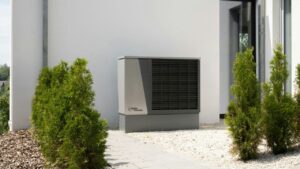
There is another increasingly important category: the heat pump water heater, sometimes called a hybrid water heater.
A conventional resistance heater creates heat directly through electrical resistance.
A heat pump takes a different approach.
It uses electricity to move heat from surrounding air into the stored water.
DOE explains that heat pump water heaters transfer thermal energy rather than relying entirely on direct resistance heating, which can make them significantly more energy efficient in suitable applications.
| Feature | Resistance Electric | Heat Pump Water Heater |
|---|---|---|
| Main heating method | Electrical resistance | Moves heat from surrounding air |
| Efficiency potential | Conventional | Usually much higher |
| Upfront cost | Often lower | Often higher |
| Installation space | Relatively flexible | Air-space and location requirements matter |
| Noise | Usually very quiet | Fan/compressor produce some sound |
| Effect on room | Minimal | Can cool/dehumidify surrounding space |
| Maintenance | Relatively simple | Filter and heat-pump components require attention |
Heat pump technology is becoming increasingly important in water-heating policy and efficiency discussions. DOE’s 2024 residential water-heater standards, with compliance requirements beginning in 2029 for affected product classes, are expected to increase use of heat-pump technology.
Understanding Uniform Energy Factor (UEF)
When shopping for a new heater, you may encounter the term Uniform Energy Factor, or UEF.
UEF is a standardized efficiency metric used for water heaters.
In broad terms, a higher UEF within an appropriate product comparison generally indicates better energy performance.
But don’t buy based on UEF alone.
Also consider:
- household hot-water demand,
- first-hour rating,
- tank size,
- available electrical service,
- installation location,
- climate,
- purchase price,
- operating cost,
- warranty,
- and expected maintenance.
DOE uses UEF as the official efficiency measure in its residential water-heater efficiency framework.
Why Electric Water Heaters Lose Heat Even When Nobody Uses Water
Imagine heating a mug of tea and leaving it on a desk.
Eventually it cools.
A storage water heater faces the same basic physics.
Heat naturally moves from warmer areas toward cooler surroundings.
Tank insulation slows that transfer but cannot eliminate it completely.
The energy required to replace heat lost while water simply sits in the tank is associated with standby heat loss.
This is why tank insulation is important.
It also explains why a storage heater periodically switches on even if nobody has opened a hot-water faucet for several hours.
The thermostat detects that the stored water has cooled and restores the lost heat.
Sediment: The Problem You Cannot See From Outside
Water contains dissolved minerals and suspended material.
Over time, sediment can accumulate near the bottom of a storage tank, particularly in areas with hard water.
The exact effect varies with water chemistry, heater construction, usage, and maintenance.
Heavy sediment accumulation may contribute to:
- reduced usable tank volume,
- unusual sounds,
- maintenance problems,
- stress on components,
- or poorer overall performance.
A drain valve is installed near the bottom of many tank heaters partly so the tank can be serviced and sediment can be removed when appropriate.
Maintenance requirements vary by manufacturer. Always follow the specific owner’s manual rather than assuming one flushing procedure applies to every model.
Why the Anode Rod Matters for Tank Life
The anode rod may be one of the least visible but most valuable components in electric water heater parts and functions.
A storage tank is constantly exposed to water.
The sacrificial anode is designed to be consumed through electrochemical activity before corrosion aggressively attacks the tank itself.
The rate of anode consumption depends on water chemistry and operating conditions.
That means there is no perfect universal replacement schedule.
Periodic professional inspection can be especially valuable in areas where water conditions are aggressive.
Once the steel tank itself develops a serious leak from corrosion, replacing a heating element will not solve the problem. Tank replacement is generally required.
Common Electric Water Heater Problems and What They May Mean
Knowing how an electric hot water heater works makes common symptoms easier to interpret.
| Symptom | Possible Causes |
|---|---|
| No hot water | Power problem, high-limit trip, upper circuit fault |
| Limited hot water | Lower element/control issue, demand exceeding capacity |
| Water too hot | Thermostat/control problem or setting issue |
| Slow recovery | Element issue, demand, incoming temperature, sediment |
| Water around heater | Plumbing leak, valve issue, tank failure, condensation from nearby equipment |
| Relief valve discharge | Temperature/pressure issue, expansion-related problem, valve fault |
| Rust-colored water | Plumbing or corrosion-related issue |
| Higher electricity use | Temperature setting, hot-water use, heat loss, fault, aging equipment |
| Breaker repeatedly trips | Electrical fault requiring professional diagnosis |
These are diagnostic clues, not guaranteed diagnoses.
For example, “no hot water” does not automatically mean “replace the element.” The breaker, wiring, thermostat, high-limit switch, element, or supply circuit could be involved.
Why a Water Heater May Trip Its Circuit Breaker
Electric resistance heating uses substantial electrical power.
If a water-heater circuit breaker trips repeatedly, possible causes can include electrical faults in the appliance or supply circuit.
Repeatedly resetting a breaker without identifying the cause is not good troubleshooting.
The breaker is a protective device.
A qualified electrician or water-heater professional can inspect the circuit and heater safely.
This is particularly important because water and high-voltage electricity are a hazardous combination.
Can an Electric Water Heater Work During a Power Outage?
A conventional electric resistance water heater cannot actively reheat water without electrical power.
However, an insulated storage tank may still contain previously heated water.
So immediately after an outage, some hot or warm water may remain available.
As that water is used or loses heat, the supply becomes cooler.
When electrical service returns, the thermostats and elements can begin restoring the tank temperature.
This stored reserve is one practical difference between tank and tankless systems.
How Much Electricity Does an Electric Water Heater Use?
Actual electricity consumption varies substantially.
Important factors include:
- household size,
- shower duration,
- number of showers,
- laundry habits,
- dishwasher use,
- tank insulation,
- thermostat setting,
- incoming-water temperature,
- tank size,
- heater efficiency,
- hot-water pipe losses,
- and local climate.
A 4,500-watt element does not mean the heater consumes 4.5 kWh every hour of the day.
The element cycles.
If a 4.5-kW element operates for one total hour, it consumes approximately:
4.5 kW × 1 hour = 4.5 kWh
But daily runtime depends on how much heat the household actually needs.
That is why two homes with identical heaters can have very different electricity consumption.
A Real-World Energy Example
Suppose Household A has four people who take long hot showers every day.
Household B has two people who use less hot water.
Both own identical 50-gallon electric heaters.
Household A removes more thermal energy from the tank every day.
More cold replacement water enters.
The elements therefore need to operate longer to restore the stored temperature.
The heater did not become “less efficient” simply because Household A’s electricity bill is higher.
Their hot-water demand is higher.
This distinction is useful when investigating unexpectedly high utility bills.
Practical Ways to Improve Electric Water Heater Efficiency
Once you understand how electric water heater works, several energy-saving strategies become easier to understand.
Reduce unnecessary hot-water use
Less hot water used means less cold water needs to be reheated.
Efficient showerheads and sensible shower duration can reduce demand without requiring a new heater.
Use an appropriate temperature setting
An unnecessarily high storage temperature can increase standby heat loss and energy use.
DOE commonly points residential users toward approximately 120°F as a practical setting, subject to individual requirements and manufacturer guidance.
Fix hot-water leaks
A dripping hot-water faucet wastes both water and the electricity already used to heat it.
Maintain the heater appropriately
Sediment, worn components, or neglected corrosion protection can affect long-term performance and service life.
Insulate hot-water piping where appropriate
Reducing heat loss between the heater and fixtures can improve delivered hot-water performance.
Choose efficiency carefully when replacing the unit
Compare UEF, first-hour rating, capacity, technology, installation requirements, and expected operating costs rather than shopping on tank size alone.
Should You Add an Insulation Blanket?
The answer depends on the heater.
Older conventional tanks with limited insulation may sometimes benefit from an approved insulation blanket when the manufacturer permits one.
Newer tanks may already contain substantial insulation.
Never cover controls, warning labels, access panels, relief-valve components, or other areas prohibited by the manufacturer.
Heat pump water heaters are a different case. DOE specifically warns against wrapping heat pump water heaters with insulation blankets because doing so can interfere with required airflow.
Check the appliance manual first.
Electric Water Heater Maintenance That Actually Matters
A sensible maintenance plan focuses on safety, tank condition, efficiency, and early detection of problems.
Items worth discussing with a qualified professional include:
- checking for visible leaks,
- evaluating the anode rod,
- inspecting electrical connections,
- checking thermostats and elements when performance changes,
- examining the T&P relief system,
- dealing with sediment according to manufacturer guidance,
- checking plumbing connections,
- and inspecting the tank for corrosion.
Do not treat every internet maintenance checklist as universal.
Water heaters vary by manufacturer, model, age, installation method, water quality, and local plumbing requirements.
The owner’s manual should be the first reference.
Electric Water Heater vs Gas Water Heater
Electric and gas storage heaters perform the same basic job but create heat differently.
| Category | Electric Storage Heater | Gas Storage Heater |
|---|---|---|
| Heat source | Resistance elements | Gas burner |
| Combustion | No | Yes |
| Flue required for conventional design | No | Usually yes |
| Typical internal heater | Immersed elements | Burner/combustion system |
| Installation needs | Suitable electrical circuit | Gas supply and appropriate venting |
| Maintenance | Electrical + plumbing | Combustion + venting + plumbing |
| Operating cost | Depends on electricity price | Depends on gas price |
| Emissions at appliance | No combustion emissions | Combustion emissions |
Neither technology is universally “better.”
Local energy prices, installation costs, household demand, electrical capacity, efficiency, and available utilities all influence the decision.
Electric Resistance vs Heat Pump: The Bigger Efficiency Question
For homeowners replacing an older resistance heater, comparing conventional resistance technology with a heat pump water heater can be worthwhile.
A resistance element essentially converts electrical energy into heat at the appliance.
A heat pump uses electricity to transfer existing environmental heat into the water.
That distinction allows a heat pump water heater to deliver more heat to the water per unit of electricity consumed than direct resistance alone under suitable operating conditions.
But heat pumps have installation considerations.
They need appropriate air volume and airflow. They may produce sound, cool the surrounding room, and require filter maintenance.
DOE specifically notes that heat pump water heaters have filters requiring regular cleaning.
So efficiency should be evaluated alongside installation practicality.
A Better Way to Size an Electric Water Heater
Many homeowners ask:
“How many gallons do I need?”
Tank capacity matters, but a better question is:
“Can this heater meet my household’s peak hot-water demand?”
Consider:
- number of household members,
- simultaneous showers,
- shower duration,
- bathtub use,
- clothes washing,
- dishwasher demand,
- incoming-water temperature,
- first-hour rating,
- recovery performance,
- and daily usage patterns.
A larger tank is not automatically the most efficient choice.
An oversized storage tank can mean paying to maintain more hot water than you regularly need.
An undersized heater, on the other hand, may leave the household repeatedly running short.
Sizing should balance comfort and energy consumption.
The Hidden Role of Incoming Water Temperature
One factor frequently missing from simple water-heater explanations is the temperature of the incoming supply.
Suppose your target water temperature is 120°F.
If incoming water arrives at 70°F, the heater needs a 50°F temperature rise.
If winter supply water arrives at 45°F, it needs a 75°F rise.
The second scenario requires substantially more heat for the same volume.
This affects:
- recovery time,
- electricity use,
- effective hot-water capacity,
- tankless sizing,
- and user experience.
It is one reason online claims such as “this heater reheats in exactly X minutes” should be treated carefully unless test conditions are provided.
Why Hot Water Can Seem to Disappear Faster in Winter
Now the winter problem makes sense.
The tank might be operating perfectly.
But colder supply water entering through the dip tube can cool the lower portion more aggressively.
More electrical energy is required to restore each gallon to the target temperature.
Meanwhile, people may take warmer or longer showers during cold weather.
Those two effects can combine to make the heater appear weaker even though nothing has failed.
This is a useful information gap often missed in basic explanations of how does an electric water heater work.
When Should an Electric Water Heater Be Replaced?
Age alone should not be the only deciding factor.
Look at the overall condition.
Replacement becomes more likely when:
- the tank itself is leaking,
- corrosion is extensive,
- repairs are becoming frequent,
- hot-water capacity no longer matches household needs,
- energy costs are high compared with modern alternatives,
- or a major repair makes little economic sense given the unit’s condition.
A replaceable heating element failing does not necessarily mean the whole tank is finished.
A leaking, corroded tank is a different situation.
The key is distinguishing a serviceable component failure from structural tank failure.
What Makes Modern Electric Water Heating Different?
The water-heating market is changing.
Traditional resistance tanks remain common, but heat pump technology, smarter controls, improved insulation, demand management, and efficiency standards are changing what buyers see in stores.
DOE finalized updated residential water-heater efficiency standards in 2024, with compliance for the amended standards required beginning May 6, 2029. DOE says the standards are expected to increase adoption of heat-pump technology for relevant product categories.
For homeowners, that means future comparisons will increasingly involve more than “gas versus electric.”
The more useful comparison may become:
resistance electric vs heat pump vs tankless vs gas, evaluated according to local energy costs and household needs.
Featured Snippet: How Electric Water Heater Works in 6 Steps
For anyone looking for the shortest useful explanation:
- Cold water enters the tank through a dip tube.
- A thermostat detects when the stored water needs heat.
- Electricity powers an immersed resistance heating element.
- The element transfers heat directly into the water.
- Heated water collects toward the top and exits when a hot-water fixture opens.
- Cold replacement water enters, and the thermostat starts another heating cycle when necessary.
Most standard residential dual-element models prioritize the upper element before transferring heating duty to the lower element.
Frequently Asked Questions
How does an electric water heater work?
A tank-style electric water heater stores water in an insulated tank and uses electric resistance elements to heat it. Thermostats control the elements according to water temperature. Hot water exits from the upper part of the tank while cold replacement water enters near the bottom.
Does an electric water heater heat all the water at once?
Not exactly. In many dual-element residential heaters, the upper element heats the upper portion first. Control then transfers to the lower element, which heats the remaining cooler water. Thermal stratification also means temperatures can differ between the top and bottom during recovery.
Do both elements on an electric water heater work at the same time?
Many conventional residential models use non-simultaneous operation, meaning the upper and lower elements normally do not operate together. Some heaters use other configurations, so the wiring diagram and manufacturer’s documentation determine how a specific unit works.
Why does my electric water heater run out of hot water quickly?
Possible causes include unusually high hot-water demand, a failed lower element or thermostat, colder incoming water, an undersized tank, sediment-related problems, or another control issue. Professional diagnosis is recommended before replacing parts.
How long does an electric water heater take to heat up?
How long does an electric water heater take to heat up depends on tank capacity, element wattage, incoming-water temperature, target temperature, and how much hot water remains. Recovery time therefore varies considerably between homes and models.
What temperature should an electric water heater be set to?
DOE commonly recommends about 120°F for many residential applications to balance energy use and scald protection, though specific health, building, manufacturer, or plumbing requirements may differ.
Why are there two heating elements?
Two elements allow different parts of a tall storage tank to be heated effectively. The upper element can prioritize usable hot water near the outlet, while the lower element handles much of the larger-volume heating and recovery work.
Does an electric water heater use electricity continuously?
No. A properly operating storage heater cycles its elements according to thermostat demand. It may periodically operate even when nobody uses hot water because heat slowly escapes from the stored water.
Can an electric water heater work without electricity?
It cannot actively heat water during a power outage. An insulated tank may still contain previously heated water for some time, but that reserve eventually cools or is replaced as water is used.
Why is my electric water heater making unusual noises?
Sediment accumulation, thermal expansion, plumbing movement, or other mechanical conditions can contribute to sounds. Persistent or new noises should be investigated rather than diagnosed from sound alone.
What does the anode rod do?
The sacrificial anode rod helps protect the steel tank against corrosion by preferentially corroding itself. Its condition can affect long-term tank durability.
What is the difference between an electric water heater and a heat pump water heater?
A conventional resistance heater generates heat directly with electrical resistance. A heat pump water heater uses electricity mainly to move heat from surrounding air into the water, allowing substantially higher efficiency in suitable installations.
Is an electric water heater safe?
A properly installed and maintained unit includes several safety features, including thermostatic controls, a high-limit cutoff and temperature-and-pressure relief protection. Electrical compartments and relief systems should not be altered or bypassed.
Why do I only get a small amount of hot water?
One possibility in a dual-element heater is that the upper section is heating while the lower heating circuit is not operating correctly. High demand, dip-tube issues, controls, tank sizing, and other conditions can produce similar symptoms.
How does an electric water heater thermostat work?
An electric water heater thermostat monitors temperature conditions and controls power to its heating circuit. It turns heating on when needed and stops or transfers the heating operation after the appropriate temperature is reached.
Final Thoughts
The physics behind an electric storage heater is simple, but the appliance is cleverly designed around it.
Cold water is directed downward. Resistance elements convert electricity into heat. Thermostats decide when those elements operate. Hot water naturally occupies the upper part of the tank, where it can be sent to faucets and showers. Every gallon removed is replaced by cold water, triggering the next recovery cycle.
That is the foundation of how electric water heater works.
Once you understand that cycle, many common water-heater mysteries stop being mysterious. A short hot-water supply can point toward capacity, demand, temperature, or element problems. High energy consumption can involve usage, settings, standby losses, or equipment condition. Slow winter recovery may partly result from colder incoming water rather than a failed heater.
The biggest practical lesson is not to judge a water heater by tank size alone. Look at the whole system: capacity, first-hour rating, heating input, incoming-water temperature, efficiency, household demand, installation conditions, maintenance history, and technology.
And when replacement time comes, compare conventional resistance heaters with newer options such as heat pump water heaters instead of automatically buying an identical version of the old appliance.
A water heater may look like a simple tank in a utility room, but every hot shower depends on a carefully coordinated cycle of plumbing, electricity, heat transfer, temperature control, pressure management, and stored thermal energy.