
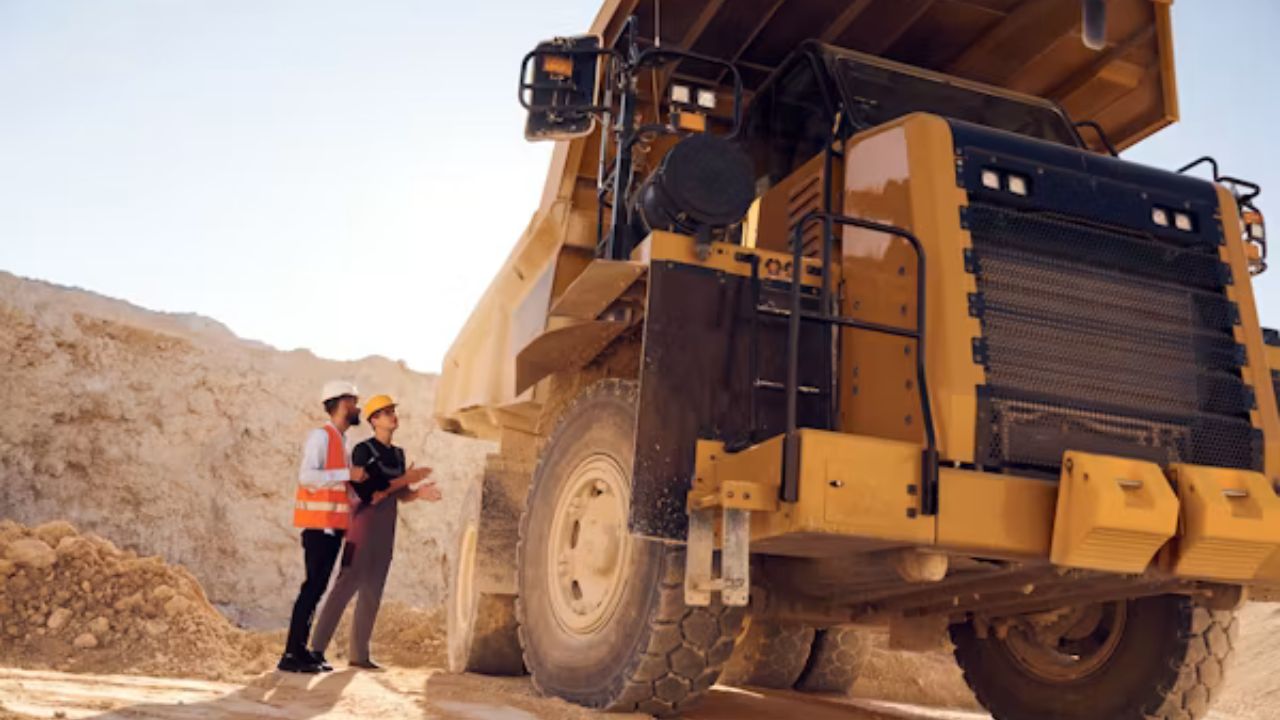
Quick Answer: Heavy equipment operator pay in the United States commonly falls around the mid-$20s per hour, but earnings vary considerably by equipment, industry, location, experience, overtime, and union status. The U.S. Bureau of Labor Statistics reports a median annual wage of $58,320 for construction equipment operators as of May 2024, equal to about $28.04 per hour. Current job-market salary databases can show somewhat different figures because they use different occupations, job postings, and reporting methods.
How Much Do Heavy Equipment Operators Make?
If you have ever watched an experienced operator grade a road, dig a foundation, move thousands of pounds of material, or maneuver an excavator in a surprisingly tight space, you already know this job involves more than pushing a few controls.
Heavy equipment operators combine mechanical knowledge, judgment, coordination, safety awareness, and years of practical experience. Their pay can reflect that skill—especially when an operator learns multiple machines, works on large infrastructure projects, accepts overtime, or moves into specialized work.
So, how much do heavy equipment operators make?
For the broad U.S. category of construction equipment operators, the Bureau of Labor Statistics reports median pay of $58,320 per year, or $28.04 per hour, based on May 2024 wage data. Operating engineers and other construction equipment operators had a slightly higher median of $58,710, while pile driver operators had a median of $70,510.
Current private job-market estimates tell a slightly different story. ZipRecruiter reported an average of roughly $49,330 per year or $23.72 per hour for a heavy equipment operator in July 2026. Indeed’s broader equipment-operator category reported an average base wage of $24.76 per hour, plus reported average overtime of $6,750 per year.
Those numbers should not be treated as contradictory. They measure different datasets and sometimes slightly different job categories.
The practical answer is that many operators can expect roughly $20 to $30+ per hour, with experienced, specialized, union, overtime-heavy, or high-cost-market positions potentially paying substantially more.
Heavy Equipment Operator Salary at a Glance
| Pay Measure | Approximate Earnings |
|---|---|
| Typical hourly range | $20–$30+ |
| BLS median hourly pay, construction equipment operators | $28.04 |
| BLS median annual pay | $58,320 |
| Operating engineers median annual pay | $58,710 |
| Pile driver operator median | $70,510 |
| BLS highest 10% of construction equipment operators | Above $99,930 |
| ZipRecruiter 2026 average | $49,330 |
| ZipRecruiter hourly average | $23.72 |
The BLS figures above are based on May 2024 occupational wage data, while the ZipRecruiter figure reflects its July 2026 salary estimate.
That distinction matters when researching heavy equipment operator salary figures. A salary website may analyze advertised jobs, while government statistics typically use employer wage surveys. Always check the date, occupation definition, and methodology before comparing two numbers.
What Does a Heavy Equipment Operator Actually Do?
A heavy equipment operator controls machinery used to excavate, grade, lift, compact, load, clear, pave, and move materials.
The work appears across construction, road building, utilities, mining, demolition, land development, government infrastructure, and related industries.
According to the BLS, construction equipment operators may clean and maintain machinery, make basic repairs, report mechanical problems, coordinate movements with ground crews, and maneuver equipment using pedals, levers, valves, and other controls.
Common machines include:
- Excavators
- Bulldozers
- Wheel loaders
- Backhoes
- Motor graders
- Skid steers
- Scrapers
- Compactors
- Pavers
- Tractors
- Trench excavators
- Front-end loaders
Modern jobs may also involve GPS-based grade-control technology, telematics, digital displays, cameras, machine-control systems, and electronic diagnostics.
That is why heavy equipment operator pay is not determined simply by someone’s ability to drive a machine. Productivity, accuracy, versatility, safety history, and job-site experience all matter.
Heavy Equipment Operator Hourly Pay
For many workers, annual salary is not the most useful number. Construction jobs frequently involve overtime, changing schedules, seasonal demand, and project-specific rates.
That makes heavy equipment operator hourly pay particularly important.
The BLS median of $58,320 for construction equipment operators corresponds to $28.04 per hour. Private salary databases currently place broader equipment-operator averages in the mid-$20s per hour.
Consider a hypothetical operator earning $25 per hour.
At 40 hours per week for 52 weeks:
$25 × 40 × 52 = $52,000
That is base gross pay before taxes and deductions.
Now suppose the same employee regularly works eligible overtime. Total annual earnings can climb considerably, which is one reason two operators with identical base rates may finish the year with very different incomes.
Later in a career, heavy equipment operator hourly pay can also rise because of advanced machine skills, supervisory responsibilities, union agreements, specialized projects, or geographic demand.
Heavy Equipment Operator Salary by Experience
Experience is one of the biggest influences on earnings.
Someone who has spent several years performing precision grading is generally more valuable to an employer than someone who has only recently learned basic loader operation.
There is no universal pay scale, but a realistic career progression often looks something like this:
| Experience Level | Typical Position |
|---|---|
| Entry level | Trainee, apprentice, junior operator |
| 1–3 years | Equipment operator |
| 3–5 years | Experienced operator |
| 5–10+ years | Senior/multi-equipment operator |
| Advanced | Lead operator, foreman, specialized operator |
Entry-Level Heavy Equipment Operator Salary
An entry-level heavy equipment operator salary tends to sit toward the lower end of the market because a new operator still needs supervised job-site experience.
Employers are not only paying for machine control. They need someone who understands soil conditions, slopes, blind spots, ground-worker communication, site plans, productivity expectations, inspections, and equipment limitations.
Apprentices can also earn less than fully trained workers. The BLS specifically notes that apprentices receive wage increases as they gain skills.
The important point for beginners is that starting pay does not necessarily indicate long-term earning potential.
A worker who begins with a loader or skid steer, develops good habits, gains experience, and learns excavation and grading can become much more valuable.
That is why someone researching an entry-level heavy equipment operator salary should look beyond the first paycheck and consider the employer’s training opportunities.
A slightly lower starting rate with strong training may sometimes produce better long-term results than a higher starting rate in a job with little opportunity to advance.
Experienced Heavy Equipment Operator Salary
Experience becomes especially valuable when it is tied to demonstrated ability.
A senior operator who can efficiently work several machines may be trusted with tasks that a beginner cannot handle independently.
That can include:
- Fine grading
- Deep excavation
- Utility work
- Road construction
- Large excavators
- GPS machine control
- Difficult terrain
- High-production earthmoving
- Complex job-site coordination
An experienced heavy equipment operator salary can therefore exceed the broad national median.
The BLS reports that the highest 10% of construction equipment operators earned more than $99,930 annually in May 2024. That does not mean most experienced operators earn six figures, but it proves that the occupation has a meaningful upper pay range.
The best-paid workers are often not simply the people who have been in the industry longest. They tend to combine experience with skills employers have difficulty replacing.
That distinction matters when evaluating an experienced heavy equipment operator salary. Ten years of narrow experience is not automatically more valuable than six years of strong multi-machine, grading, technology, and project experience.
What Equipment Pays the Most?
People often ask which machine they should learn if their main goal is higher earnings.
There is no single machine that always pays the most.
Compensation depends on the industry, project, geographic area, collective bargaining agreements, employer, complexity, and demand for the skill.
Still, specialized machinery can create opportunities for better pay.
Excavator Operator Salary
Excavators are essential on many construction sites.
Operators may dig foundations, trenches, drainage systems, utility lines, ponds, and large earthmoving projects.
An excavator operator salary can improve as the operator becomes capable of precise work rather than basic bulk digging.
Precision is valuable.
Digging quickly is useful. Digging quickly without damaging utilities, over-excavating, wasting material, or creating unnecessary rework is much more useful.
Employers evaluating an excavator operator salary may therefore consider bucket control, production speed, safety, grade awareness, trenching experience, and the size of equipment the person can operate.
Bulldozer Operator Salary
Bulldozer work can range from basic material movement to highly precise grading.
A skilled dozer operator learns to read terrain and anticipate how material will move rather than constantly correcting mistakes.
A bulldozer operator salary can rise with experience in road construction, site development, mining, landfill operations, and GPS-assisted grading.
Large-scale projects often place considerable responsibility on dozer operators because poor grading creates expensive problems later.
A strong bulldozer operator salary therefore tends to reflect more than the ability to move dirt. Employers value efficiency, finish quality, fuel awareness, machine care, and coordination with surveyors and other operators.
Loader Operator Salary
Loaders appear in construction, quarries, recycling facilities, material yards, mining, roadwork, snow operations, and other settings.
A loader operator salary depends heavily on the environment.
Loading trucks in a high-production quarry can require a different skill set from operating a compact loader around a residential construction site.
Experienced operators learn how to fill buckets efficiently, maintain safe travel paths, minimize tire and equipment wear, and keep production moving without unnecessary waiting.
That productivity can influence loader operator salary negotiations because an efficient operator directly affects how much material a crew moves during a shift.
Grader Operator Salary
Motor graders have a reputation for requiring considerable skill.
Road surfaces, drainage slopes, crowns, shoulders, and final grade can require very fine adjustments.
A grader operator salary may reflect that specialization, particularly when employers need operators capable of finish work.
Modern GPS and automated grade-control technology have changed the job, but they have not eliminated the need for operator judgment.
Technology can tell an operator where grade should be. It cannot replace every decision about material, traction, machine positioning, drainage, and changing site conditions.
That is why an experienced grader operator salary can be competitive on road and infrastructure projects.
Do Heavy Equipment Operators Make Good Money?
For a career that often does not require a traditional four-year university degree, the earning potential can be attractive.
The BLS lists a high school diploma or equivalent as the typical entry-level education for construction equipment operators and reports moderate-term on-the-job training. Some workers instead learn through apprenticeships or vocational schools.
So, do heavy equipment operators make good money?
Compared with the median for all U.S. occupations, the answer can be yes. The May 2024 median for construction equipment operators was $58,320, compared with $49,500 across all occupations.
Pay alone, though, should not determine whether the career is right for someone.
The work can involve outdoor conditions, noise, dust, changing schedules, long shifts, and substantial responsibility. The BLS notes that operators may work in unpleasant weather and may have irregular schedules, including nighttime work.
So when asking do heavy equipment operators make good money, consider compensation alongside working conditions, benefits, overtime opportunities, job stability, and training costs.
How Much Do Heavy Equipment Operators Make a Year?
Using government occupational data, the broad national answer is about $58,320 in median annual earnings for construction equipment operators.
However, how much do heavy equipment operators make a year varies dramatically from one worker to another.
The BLS provides an especially useful range:
- Lowest 10%: below $39,850
- Median: $58,320
- Highest 10%: above $99,930
That spread shows why a single national average does not tell the whole story.
A trainee working locally on smaller projects may have completely different earnings from an experienced operator on major infrastructure projects who works significant overtime.
When researching how much do heavy equipment operators make a year, always ask five follow-up questions:
- Where is the job?
- What equipment is involved?
- What industry is hiring?
- How much experience is required?
- Is overtime available?
Those details turn a generic salary estimate into a useful career comparison.
Heavy Equipment Operator Salary by Industry
Industry can influence wages nearly as much as experience.
BLS May 2024 figures show median annual wages for construction equipment operators in several major industries:
| Industry | Median Annual Wage |
|---|---|
| Construction of buildings | $63,850 |
| Heavy and civil engineering construction | $61,710 |
| Specialty trade contractors | $58,760 |
| Mining, quarrying, oil and gas extraction | $57,850 |
| Local government | $51,260 |
These figures illustrate why heavy equipment operator salary by industry deserves attention.
An operator performing road and bridge work may encounter different wage structures, overtime patterns, and project schedules than someone working for a municipality.
Heavy and Civil Engineering
Roads, bridges, airports, dams, utilities, and other infrastructure can require large crews and specialized machines.
The median wage of $61,710 reported for heavy and civil engineering construction is above the overall occupation median.
Building Construction
Construction of buildings had a $63,850 median—the highest among the major industries listed by BLS for this occupation.
Mining and Quarrying
Mining and quarry operations can use large loaders, excavators, dozers, haul equipment, and related machinery.
Conditions and schedules vary widely, and some jobs may be located far from major population centers.
Local Government
Municipal and county operators may work on roads, drainage, snow removal, utilities, public works, and maintenance.
Private-sector wages are not the only consideration here. Benefits, retirement arrangements, schedules, and job stability can affect the total value of a compensation package.
For that reason, comparing heavy equipment operator salary by industry requires looking at total compensation rather than base hourly pay alone.
Heavy Equipment Operator Salary by State and Location
Geography can create large differences in operator wages.
A heavy equipment operator salary by state can vary because of:
- Local construction demand
- Cost of living
- Union presence
- Infrastructure spending
- Weather and seasonality
- Mining or energy activity
- Labor shortages
- Prevailing wage requirements
- Employer competition
Current job-market estimates demonstrate these differences. For example, ZipRecruiter’s July 2026 salary data listed several Alaska and California locations among its higher-paying cities for heavy equipment operators, though city-level figures can fluctuate as new job postings enter the dataset.
High nominal pay does not automatically mean better purchasing power.
Suppose one operator earns $65,000 in an expensive metropolitan area and another earns $55,000 in a lower-cost region. The second worker could potentially have more disposable income after housing and other expenses.
So anyone comparing a heavy equipment operator salary by state should evaluate:
Pay + overtime + benefits − local living costs
That calculation is far more useful than chasing the highest advertised annual salary.
Union Heavy Equipment Operator Pay
Union jobs can have a different compensation structure from nonunion positions.
A union heavy equipment operator salary may be based on negotiated wage scales that consider classification, experience, geographic jurisdiction, and project type.
Compensation can also include benefits that are not obvious when looking only at the hourly wage.
Depending on the agreement, workers may receive benefits related to health coverage, retirement, training, and other negotiated provisions.
The International Union of Operating Engineers is one of the major labor organizations associated with operating engineers and equipment-related trades in the United States and Canada.
Union membership does not automatically guarantee that every job pays more than every nonunion job.
Local conditions matter.
Still, anyone comparing a union heavy equipment operator salary with a nonunion offer should compare total compensation—not just the number printed next to “hourly rate.”
Does Overtime Make a Big Difference?
Yes, it can.
Indeed’s July 2026 equipment-operator salary page reported average base pay of $24.76 per hour and reported average overtime compensation of $6,750 annually.
Actual overtime varies enormously by employer and project.
Consider two hypothetical operators earning the same $27 base rate.
Operator A works close to 40 hours every week.
Operator B spends part of the year on deadline-driven projects with substantial eligible overtime.
Even with identical base rates, their annual gross earnings can be thousands of dollars apart.
This explains why heavy equipment operator overtime pay is important when comparing offers.
Ask employers:
- How many hours are typical?
- Is overtime frequent or occasional?
- Is the work seasonal?
- Are weekend shifts common?
- Does the project include night work?
- How are overtime hours compensated?
The BLS notes that most construction equipment operators work full time, some work more than 40 hours per week, and irregular or nighttime schedules can occur.
For some workers, heavy equipment operator overtime pay becomes one of the largest differences between base salary and actual annual earnings.
What Factors Affect Heavy Equipment Operator Pay?
Two people with the same job title can have very different paychecks.
Here are the factors that matter most.
1. Experience
Experienced operators usually require less supervision and can handle more complex tasks.
2. Number of Machines You Can Operate
Versatility has value.
An employer may prefer someone capable of moving from an excavator to a dozer or loader when project needs change.
3. Specialized Skills
Finish grading, GPS machine control, underground utility work, trenching, road construction, and large-equipment experience can make an operator more competitive.
4. Location
Local labor supply and project demand directly affect wages.
5. Industry
Infrastructure, commercial construction, mining, public works, and specialty contracting have different pay structures.
6. Union Status
Collective bargaining agreements may affect wages and benefits.
7. Overtime
An operator with regular overtime can earn significantly more than base salary suggests.
8. Safety Record
An operator controls expensive machinery around workers, vehicles, structures, utilities, and other hazards.
Safe, predictable performance matters.
9. Productivity
Employers notice operators who complete quality work efficiently without creating rework.
10. Technology Skills
Machine control continues to become more common.
Operators who understand GPS grade-control systems, digital plans, telematics, and machine displays may have an advantage.
Together, these variables explain what affects heavy equipment operator pay more accurately than experience alone.
The most valuable operator is often the one who combines technical skill, versatility, safety, machine care, and productivity.
Understanding what affects heavy equipment operator pay also helps workers make smarter career decisions. Instead of waiting for annual raises, they can intentionally build skills tied to higher-value work.
How to Increase Your Heavy Equipment Operator Salary
Career earnings usually improve when workers become harder to replace.
Learn More Than One Machine
A worker who operates only a loader has fewer options than someone competent on loaders, excavators, dozers, and graders.
Do not chase quantity at the expense of competence, though. Being genuinely good on three machines is more useful than claiming superficial familiarity with ten.
Develop Precision Skills
Bulk earthmoving is important, but finish work often requires more judgment.
Learn grading, slopes, drainage, trenching, and accurate material placement.
Learn Machine-Control Technology
GPS-assisted grading and related technologies are increasingly part of modern earthmoving.
Understanding the technology while retaining strong traditional operating skills creates a valuable combination.
Understand Basic Maintenance
Operators who identify problems early can help reduce downtime and expensive equipment damage.
The BLS includes cleaning, maintenance, basic repairs, and reporting equipment problems among common operator duties.
Protect Your Safety Record
Speed without control is not productivity.
Employers value operators who can work efficiently without creating unnecessary risks.
Become Good at Communication
Operators constantly coordinate with laborers, truck drivers, supervisors, survey crews, spotters, mechanics, and other equipment operators.
Clear communication keeps production moving.
Pursue Higher-Value Projects
Once your skills are strong enough, look at infrastructure, large commercial projects, civil construction, specialized earthwork, and other sectors that need experienced operators.
These strategies can improve heavy equipment operator career growth because they increase the range of jobs an operator can perform.
Long-term heavy equipment operator career growth may eventually lead beyond the cab into lead operator, foreman, superintendent, trainer, estimator, equipment manager, or other construction-management roles.
Education and Training Requirements
One advantage of this occupation is that the typical entry path does not require a bachelor’s degree.
The BLS identifies a high school diploma or equivalent as typical entry-level education and moderate-term on-the-job training as the usual training path. Workers may also enter through apprenticeships or vocational programs.
On-the-Job Training
Some employers hire beginners and train them progressively.
A worker may start around equipment before being trusted with increasingly complex tasks.
Apprenticeships
Apprenticeships combine structured instruction with practical experience.
The BLS notes that apprentice wages generally rise as skills improve.
Vocational Training
Equipment schools can introduce students to machinery, terminology, safety procedures, inspections, and basic operating techniques.
Training alone does not replace job-site experience.
A certificate can help open the door; consistent performance builds the career.
Heavy Equipment Operator vs Construction Laborer Pay
Operating equipment can offer stronger earning potential than general construction labor.
BLS data puts the May 2024 median annual wage for construction laborers at $46,730, while construction equipment operators had a median of $58,320.
| Occupation | 2024 Median Annual Pay |
|---|---|
| Construction laborer | $46,730 |
| Construction equipment operator | $58,320 |
| Operating engineer/other construction equipment operator | $58,710 |
| Pile driver operator | $70,510 |
This heavy equipment operator vs construction laborer salary comparison shows why learning equipment operation can represent a meaningful career step for someone already working on construction sites.
The comparison is not perfect because occupations and projects differ, but the national data clearly shows higher median compensation for equipment operators.
Someone considering heavy equipment operator vs construction laborer salary should also consider training, responsibility, job availability, and long-term advancement—not salary alone.
Heavy Equipment Operator vs Crane Operator Salary
Crane operators fall under a different occupational category in federal statistics.
The BLS reports that crane and tower operators had a median annual wage of $66,370 in May 2024.
That is higher than the $58,320 median for construction equipment operators.
However, a heavy equipment operator vs crane operator salary comparison needs context.
Crane work has different responsibilities and training requirements. It should not be viewed simply as “another machine” in the same way someone might move between a loader and excavator.
Likewise, actual wages vary significantly by employer, region, project, and experience.
The heavy equipment operator vs crane operator salary question is therefore useful for career research, but the occupations should be evaluated separately.
Is Heavy Equipment Operation a Good Career?
For the right person, it can be.
The occupation combines skilled work with a relatively accessible education pathway and national demand.
BLS projects employment of construction equipment operators to grow 4% from 2024 through 2034, roughly as fast as the average for all occupations. It projects about 46,200 openings per year, on average, during the decade, with many openings coming from replacement needs.
The occupation also had about 539,500 jobs in 2024.
Advantages
Potential benefits include:
- Competitive wages
- No typical four-year-degree requirement
- Apprenticeship pathways
- Transferable construction skills
- Opportunity to specialize
- Overtime potential
- Advancement into supervisory work
Challenges
The job can also involve:
- Outdoor weather
- Dust and noise
- Early starts
- Night work
- Seasonal slowdowns in some regions
- Long periods of concentration
- Irregular schedules
- Significant safety responsibility
A good career decision considers both sides.
A Realistic Career Scenario
Imagine two people entering equipment operation at roughly the same time.
Operator A learns basic loader operation and remains in essentially the same role for six years.
Operator B starts on a loader, becomes competent on an excavator, learns dozer grading, develops GPS machine-control skills, gets experience on utility and civil projects, and earns a reputation for reliable work.
Both have six years of experience.
Their value in the labor market may be very different.
This illustrates one of the biggest salary lessons in the industry:
Years of experience matter, but the quality and variety of that experience matter more.
Employers ultimately pay for problems an employee can solve.
An operator capable of completing difficult work safely, accurately, and independently solves more expensive problems.
That is where long-term wage growth often comes from.
How to Compare Heavy Equipment Operator Job Offers
Never compare jobs using hourly pay alone.
Suppose you receive these hypothetical offers:
| Factor | Job A | Job B |
|---|---|---|
| Base rate | $29/hr | $26/hr |
| Typical weekly hours | 40 | 48 |
| Benefits | Limited | Strong |
| Commute | 70 min | 25 min |
| Training | Minimal | Multi-machine |
| Advancement | Limited | Good |
Job A appears better at first because the hourly wage is higher.
But Job B may offer greater annual earnings, less commuting, better benefits, and stronger career development.
A smart comparison includes:
Total compensation = base wages + overtime + benefits + retirement value + allowances − job-related costs
Then consider training and advancement.
Early in a career, learning a valuable skill can sometimes be worth more than an extra dollar per hour.
How Much Can Top Heavy Equipment Operators Make?
This is where salary research becomes interesting.
BLS data shows the highest 10% of construction equipment operators earning more than $99,930 per year.
That figure should not be interpreted as a standard salary target for every operator. It represents the upper end of the national wage distribution.
Reaching that level may involve some combination of:
- Years of high-quality experience
- Specialized machinery
- Strong geographic market
- Major infrastructure projects
- Union wage scales
- Overtime
- Difficult schedules
- Advanced grading skills
- High-production environments
- Supervisory responsibilities
Private salary databases may report lower “top earner” figures because their datasets and definitions differ. For example, ZipRecruiter’s July 2026 heavy equipment operator estimate placed the 90th percentile around $63,000.
This large difference is a good reminder that salary sources should not be mixed without understanding how the data was collected.
Salary Data: Why Different Websites Give Different Answers
Search heavy equipment operator average salary and you may see $47,000, $49,000, $58,000, or another figure.
That does not necessarily mean someone is wrong.
Different sources measure different things.
The Bureau of Labor Statistics groups workers according to formal occupational classifications and surveys employers.
Job websites may analyze:
- Advertised vacancies
- User-reported salaries
- Employer postings
- Proprietary salary estimates
- Different job-title definitions
Indeed’s broader “equipment operator” page, for instance, reported $24.76 per hour in July 2026, while ZipRecruiter’s “heavy equipment operator” estimate reported $23.72 per hour. The BLS’s construction equipment operator category reports $28.04 per hour based on May 2024 wage data.
For reliable research, use government data as a national benchmark and recent job postings to understand current local market conditions.
That approach gives heavy equipment operator average salary research both stability and real-world context.
Featured Snippet: How Much Do Heavy Equipment Operators Make?
How much do heavy equipment operators make? U.S. construction equipment operators earned a median $58,320 per year ($28.04 per hour) according to BLS May 2024 data. Current private salary estimates put general heavy equipment operator pay closer to the mid-$20s per hour. Experienced and specialized operators can earn considerably more, with the highest 10% in the BLS construction-equipment category earning above $99,930 annually.
Pay varies by experience, location, equipment, industry, overtime, and union status.
Frequently Asked Questions
How much do heavy equipment operators make per hour?
National figures vary by source. The BLS reports a median of $28.04 per hour for construction equipment operators based on May 2024 data. ZipRecruiter’s July 2026 heavy equipment operator estimate was $23.72 per hour, while Indeed’s broader equipment operator category reported $24.76 per hour.
How much do heavy equipment operators make annually?
The BLS reports a median annual wage of $58,320 for construction equipment operators. Operating engineers and other construction equipment operators had a median of $58,710.
Can heavy equipment operators make $100,000 a year?
Some can approach or exceed that level. BLS data shows that the highest 10% of construction equipment operators earned more than $99,930 annually in May 2024. Such earnings are not typical and may depend on specialization, location, experience, industry, overtime, and other factors.
What is the average heavy equipment operator salary?
Current private salary databases generally put broad equipment-operator pay around the mid-$20s per hour. Government data uses a median rather than a simple average in its Occupational Outlook Handbook and reports $58,320 annually for construction equipment operators.
Which heavy equipment operators make the most money?
Specialized operators can have stronger earning potential. Among the BLS construction-equipment categories, pile driver operators had a median annual wage of $70,510 in May 2024, compared with $58,710 for operating engineers and other construction equipment operators.
Do excavator operators make good money?
Experienced excavator operators can earn competitive wages, especially when they have precision excavation, utility, grading, or large-equipment experience. Actual compensation varies by location and employer.
Does operating a bulldozer pay well?
It can. Experienced dozer operators with finish-grading, roadwork, GPS machine-control, or high-production earthmoving experience can be particularly valuable to contractors.
Do heavy equipment operators get overtime?
Some do. BLS reports that some construction equipment operators work more than 40 hours per week and that irregular schedules can occur. Overtime availability and compensation depend on the employer, project, and applicable employment rules.
Do you need a college degree to become a heavy equipment operator?
Usually not. BLS lists a high school diploma or equivalent as the typical entry-level education. Workers commonly learn through on-the-job training, apprenticeships, or vocational schools.
Is heavy equipment operation a growing career?
BLS projects 4% employment growth for construction equipment operators from 2024 to 2034 and about 46,200 openings annually on average over the decade.
Is heavy equipment operating better than general construction labor?
It depends on your goals, but the national median wage is higher. Construction equipment operators had a $58,320 median in May 2024 compared with $46,730 for construction laborers.
What skills can increase an operator’s pay?
Multi-machine experience, precision grading, excavation, GPS machine-control knowledge, basic equipment maintenance, strong safety performance, communication, and experience on complex projects can strengthen a worker’s value to employers.
Final Thoughts
The question how much do heavy equipment operators make has a better answer than a single salary figure.
At the national level, the BLS provides a strong benchmark: construction equipment operators earned a median $58,320 annually or $28.04 per hour in May 2024. Operating engineers and other construction equipment operators had a median of $58,710, and the occupation’s highest 10% earned above $99,930.
Current job-market sources show somewhat lower broad averages—roughly $23–$25 per hour—but those figures use different datasets and occupational definitions.
For someone building a career, the more useful question eventually becomes: What skills will make me a higher-value operator?
Experience helps, but targeted experience helps more.
Operators who learn multiple machines, develop precision grading and excavation skills, understand modern machine-control technology, maintain strong safety records, and move toward complex projects can put themselves in a much stronger position to compete for better-paying work.